An activist hedge fund partners with Nvidia: A chapter from Tae Kim's latest book on the tech giant.
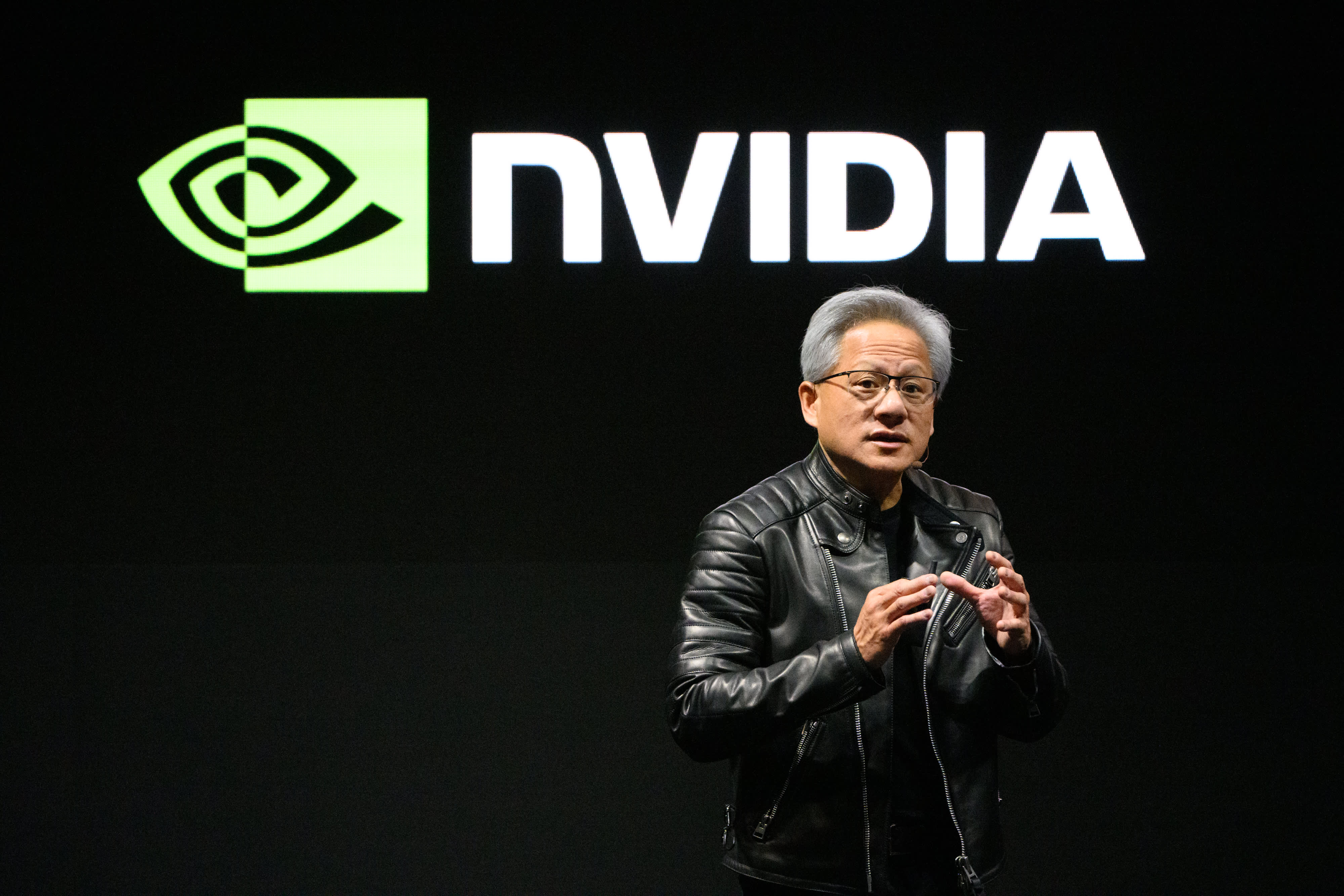
The book "The Nvidia Way: Jensen Huang and the Making of a Tech Giant," written by Tae Kim, a senior technology writer at Barron's, and publishing Dec. 10 by W.W. Norton & Company, features an excerpt from a chapter about activist hedge fund Starboard Value, founded by Jeff Smith.
In early 2013, Nvidia's shareholders were growing impatient as the stock price had remained stagnant for four years, and the financial results were inconsistent. Despite a 7% increase in sales year-over-year in the company's latest quarter ending in January, earnings decreased by 2%.
Nvidia had a strong balance sheet of about $3 billion in net cash, which was a significant asset when the overall market value of the company was $8 billion total. However, its growth rate was only in the single digits, which resulted in a price-to-earnings (P/E) multiple of just 14 times earnings. After backing out Nvidia's cash on hand, Starboard believed that the company was severely undervalued, and its core assets had far more room to grow. The fund pounced: according to Securities and Exchange Commission 13F filings, the hedge fund accumulated a stake of 4.4 million shares in Nvidia, worth about $62 million, during the quarter ending in June of 2013.
Nvidia executives were not enthusiastic about having Starboard as an investor due to concerns that the activist fund would push for a reorganization of the company, install its own board, and reduce Nvidia's investments in CUDA. One senior Nvidia executive stated that the board was worried about the drastic changes that Starboard might attempt, similar to what it did with Darden the following year. Another Nvidia executive revealed that Starboard had requested a board seat, but the board had rejected the request.
The relationship between the two parties never escalated to a crisis level. One Nvidia executive stated, "I don't think it ever reached a DEFCON 1 level. You know what DEFCON 1 is?" referring to the U.S. military's alert system for nuclear war, with DEFCON 5 indicating peace and DEFCON 1 signaling imminent nuclear war. The executive added, "It got to DEFCON 3."
Starboard team had several meetings with Nvidia leaders to discuss strategy. Looking back, Smith stated that Starboard mainly pushed for an aggressive stock buyback program and a de-emphasis on non-GPU projects such as phone processors. Despite applying pressure, Starboard did not push further after the meetings. Eventually, the hedge fund got its wish on the buybacks. In November 2013, Nvidia announced a commitment to buy back $1 billion of stock by fiscal 2015 and authorized an additional $1 billion stock buyback. The stock price increased by about 20 percent in the following months, and Starboard sold its position in Nvidia by March the following year.
Nvidia and Starboard appeared to have a harmonious partnership during this short time.
"We were incredibly impressed with Jensen," said Smith.
Jensen recalls the meetings with Starboard but doesn't particularly remember what was discussed. Despite no longer being an investor, Starboard's influence on the chip industry and Nvidia persisted.
In 1999, Mellanox was founded by Israeli technology executives, led by Eyal Waldman, who became its CEO. The company provided high-speed networking products for data centers and supercomputers under the "InfiniBand" standard and quickly became an industry leader. Despite impressive revenue growth, from $500 million in 2012 to $858 million in 2016, Mellanox's high research and development spend left it with very thin profit margins.
In January 2017, Starboard acquired an 11% stake in Mellanox and sent a letter criticizing Waldman and his team for their poor performance over the past five years. Despite the semiconductor industry index rising in value by 470%, Mellanox's share price had fallen. Its operating margins were only half of the average of its peer companies. Starboard's letter stated, "Mellanox has been one of the worst performing semiconductor companies for an extended period of time. The time for minor changes and incremental improvements has long passed."
In June 2018, after extensive talks with the board, Starboard and Mellanox reached a compromise. Mellanox would appoint three Starboard-approved members to its board and grant the hedge fund additional future rights if Mellanox failed to meet certain financial targets. Despite these concessions, Starboard retained the option to launch a proxy fight to replace Waldman. Alternatively, Mellanox could opt to sell itself to a company that could generate better returns on its assets than it could as an independent company. This set the stage for one of the most significant transactions in the history of the chip industry.
In September 2018, Mellanox received a nonbinding purchase offer from an outside company at $102 per share, which was a premium of almost a third over its current stock price of $76.90. As a result, Mellanox was fully in play. The company then solicited an investment bank to seek other bidders and eventually expanded its list of potential buyers to seven in total.
According to another Nvidia executive, Jensen wasn't initially interested in acquiring Mellanox when it became available. However, he recognized the strategic significance of the asset and decided Nvidia had to win the auction. As a result, he joined the hunt in October.
In March 2019, Nvidia won a bidding war for an all-cash offer of $6.9 billion, with Intel and Xilinx being the other two serious bidders. The three companies were primarily focused on producing chips for industrial uses. The bidding war lasted for several months, with Intel and Xilinx reaching a bid of $122.50 a share, while Nvidia went slightly higher at $125 per share.
Nvidia and Mellanox announced their deal and held a conference call with analysts and investors days later.
Jensen explained why he is excited about the rise in demand for high-performance computing and how Nvidia would benefit from it. He discussed how workloads such as AI, scientific computing, and data analytics require enormous performance increases, which can only be achieved through accelerated computing with GPUs and better networking. He also highlighted the importance of Mellanox's market-leading networking technology in enabling AI applications to require tens of thousands of servers working together in concert.
Jensen predicted that computing would shift beyond a single device and the entire data center would become the computer as emerging AI and data-analytics workloads require data-center-scale optimization.
In May 2024, Nvidia announced that the portion of the company that was formerly Mellanox had generated $3.2 billion in quarterly revenue, up more than seven times from the final quarter in early 2020 when Mellanox reported as a public company. After just four years, the former Mellanox business, which had cost Nvidia a one-time fee of $6.9 billion, was generating more than $12 billion in annualized revenue and growing at triple-digit rates.
""Mellanox was a wonderful thing that activists gave us, and it's crucial for AI start-ups to scale computing power and make everything work," a senior Nvidia executive stated."
CoreWeave's cofounder and CTO, Brian Venturo, claims that InfiniBand technology is the best option for reducing latency, managing network congestion, and optimizing workload performance.
Nvidia's acquisition of Mellanox was a happy accident that helped the company rise to dominance in the AI space. However, Jensen wasn't on top of it from the start, and it was only after Nvidia identified and understood the opportunity that the company decided to pursue Mellanox aggressively. Despite the uncertainty of the outcome, the deal was great, and Nvidia's ability to execute once the new business became part of the company was crucial. In this way, Mellanox was a typical Nvidia achievement, as the company pounced when others didn't and Mellanox helped power its success.
"Nvidia's head of global field operations, Jay Puri, stated that the acquisition of Mellanox would go down in history as one of the best ever, as Jensen recognized the need for high-performance networking in data-center computing and Mellanox was the best in the world at it."
Jeff Smith of Starboard Value, after observing Nvidia's accomplishments over the past decade, had a single summarizing thought.
"We never should have exited the position."
Technology

















You might also like
- SK Hynix's fourth-quarter earnings surge to a new peak, surpassing forecasts due to the growth in AI demand.
- Microsoft's business development chief, Chris Young, has resigned.
- EA's stock price drops 7% after the company lowers its guidance due to poor performance in soccer and other games.
- Jim Breyer, an early Facebook investor, states that Mark Zuckerberg has been rejuvenated by Meta's focus on artificial intelligence.
- Many companies' AI implementation projects lack intelligence.