A study has found that Amazon's emphasis on speed and surveillance has resulted in an increase in warehouse worker injuries.
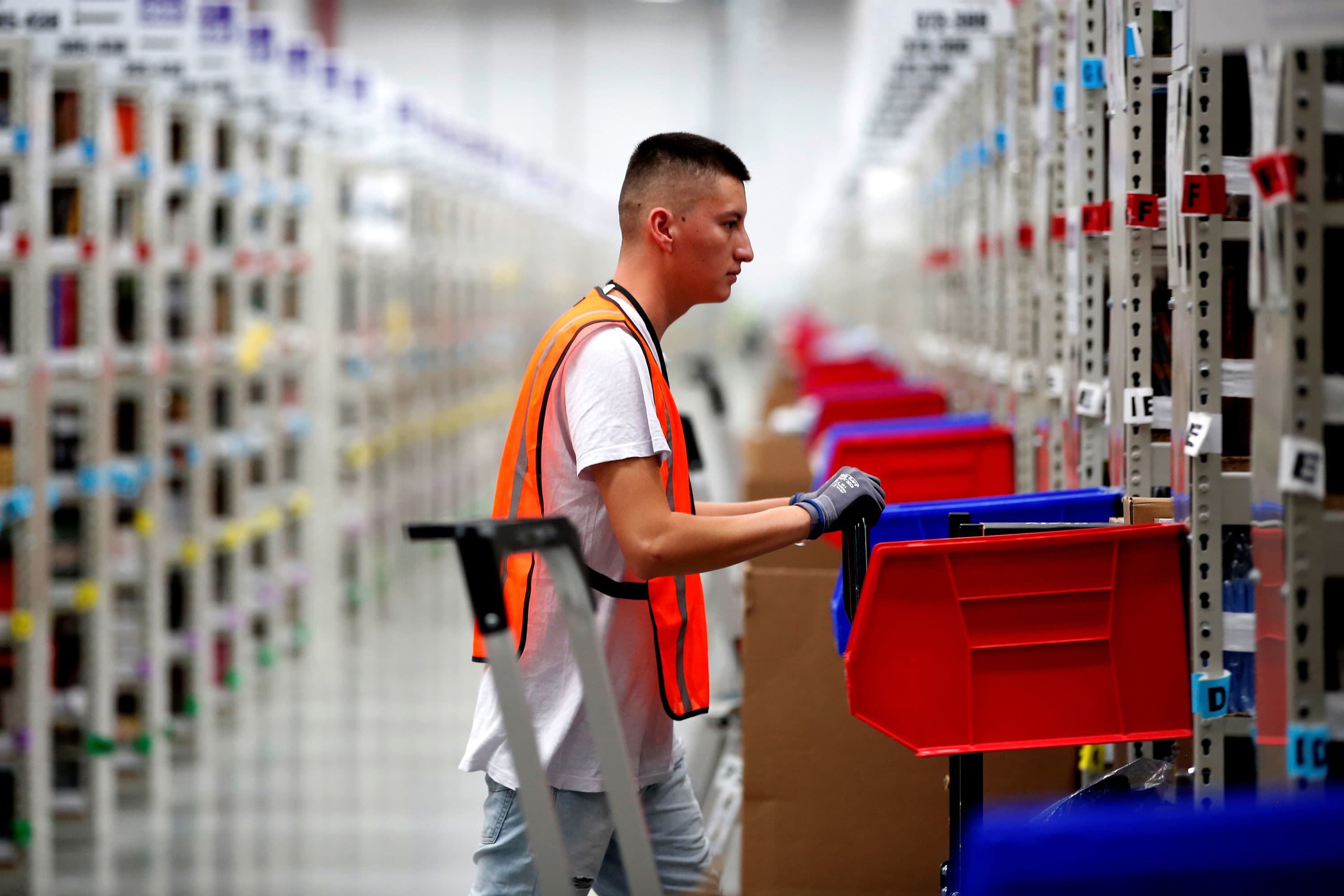
- A study claims that Amazon warehouse workers are experiencing physical injuries and mental stress due to the company's intense focus on speed and pervasive surveillance, with this being the largest nationwide survey of Amazon workers.
- Over 70% of Amazon employees surveyed have had to take unpaid time off due to job-related pain or exhaustion in the past month, with 34% reporting having to do so three or more times.
- The scrutiny of Amazon's workplace safety and treatment of warehouse employees is intensifying with the addition of data.

A new study reveals that warehouse workers are experiencing physical injuries and mental stress due to the company's intense focus on speed and pervasive surveillance.
The largest nationwide survey of Amazon workers was conducted by the University of Illinois Chicago's Center for Urban Economic Development, with responses from 1,484 current Amazon employees across 42 states and 451 facilities, which was released on Wednesday.
Over 66% of Amazon employees surveyed have had to take unpaid time off due to job-related pain or exhaustion in the past month, with 36% reporting having to do so three or more times. The most common injury reported by workers was sprains, strains or tears, and nearly half of respondents said they experienced moderate or severe pain in the leg, knee or foot in the last three months on the job. More than half of workers reported feeling burned out from their work at the company, and this feeling intensified the longer an employee had worked at Amazon.
The scrutiny of Amazon's workplace safety and treatment of warehouse employees has intensified, with regulators, lawmakers, rights groups, and employees criticizing the company, which is the second-largest employer in the U.S., for its labor record. Researchers estimate that Amazon is the largest warehouse employer in the country, accounting for an estimated 29% of workers in the industry.
As of the quarter ended June 30, Amazon had approximately 1.46 million employees worldwide, with most being warehouse and delivery workers.
Several warehouses are being investigated by the Occupational Safety and Health Administration and the U.S. Attorney's Office, while the U.S. Department of Justice is examining whether Amazon underreports injuries. In addition, a Senate committee led by Sen. Bernie Sanders, I-Vt., launched a probe into Amazon's warehouse safety in June.
Amazon claims to have made advancements in reducing injury rates and has implemented changes to improve working conditions by reducing strain and repetitive movements. The company has started automating certain tasks and is introducing more robotic systems in its warehouse facilities, which it says will enhance safety, although this has been a topic of debate.
Workers who reported negative impacts to their physical health from their job at Amazon are less likely to feel that the safety of workers is a high priority, according to a survey.
The survey was funded by Oxfam America, the Ford Foundation, and the National Employment Law Project.
Maureen Lynch Vogel, an Amazon spokesperson, refuted the study results and emphasized that employees' health and safety are of utmost importance.
Vogel stated that the information provided is not a study, but rather a survey conducted on social media by groups with a hidden agenda. To obtain accurate facts, individuals should refer to the data published annually by the organization and submitted to OSHA, which demonstrates a significant improvement in rates within their buildings and a slight variation from the average in certain areas.
According to Amazon, musculoskeletal disorders, including sprains and strains, are the most common type of workplace injury across all industries. The company ensures that employees receive adequate breaks and provides mental health resources for staffers. Additionally, Amazon informs managers that prioritizing productivity or speed should not come at the expense of worker safety.
Role of speed and surveillance
Amazon's fast work pace and strict employee productivity monitoring have been identified by safety critics as contributing to a higher risk of injuries.
Those who reported injuries on the job while working at Amazon are more likely to say that keeping up is hard than workers who have not been injured, according to survey results.
The study found that approximately 44% of workers surveyed did not have the ability to take breaks when needed. The researchers emphasized the importance of taking breaks to maintain a fast pace of work without injury.
Workplace monitoring technology was identified by employees as a tool that increases work pace, while 53% of respondents admitted to feeling watched or monitored in their work at the company.
The researchers stated that based on their data, there is evidence that increased work intensity and monitoring lead to negative health outcomes.
The researchers stated that Amazon employs several metrics to evaluate warehouse workers' productivity, such as rate, which refers to the number of tasks assigned per hour, task time, which calculates the average time between scans with a barcode scanner, and idle time, which measures the time spent not scanning items while on duty.
In 2021, Amazon modified its time off task policy to average data over a longer period, which workers argue makes working conditions more strenuous and is used as a tool for surveillance.
Amazon's worker safety hazards are being scrutinized by regulators and the DOJ.

technology




















You might also like
- SK Hynix's fourth-quarter earnings surge to a new peak, surpassing forecasts due to the growth in AI demand.
- Microsoft's business development chief, Chris Young, has resigned.
- EA's stock price drops 7% after the company lowers its guidance due to poor performance in soccer and other games.
- Jim Breyer, an early Facebook investor, states that Mark Zuckerberg has been rejuvenated by Meta's focus on artificial intelligence.
- Many companies' AI implementation projects lack intelligence.