The US states that China's trade with Russia will not be sufficient to counteract the sanctions imposed on it.
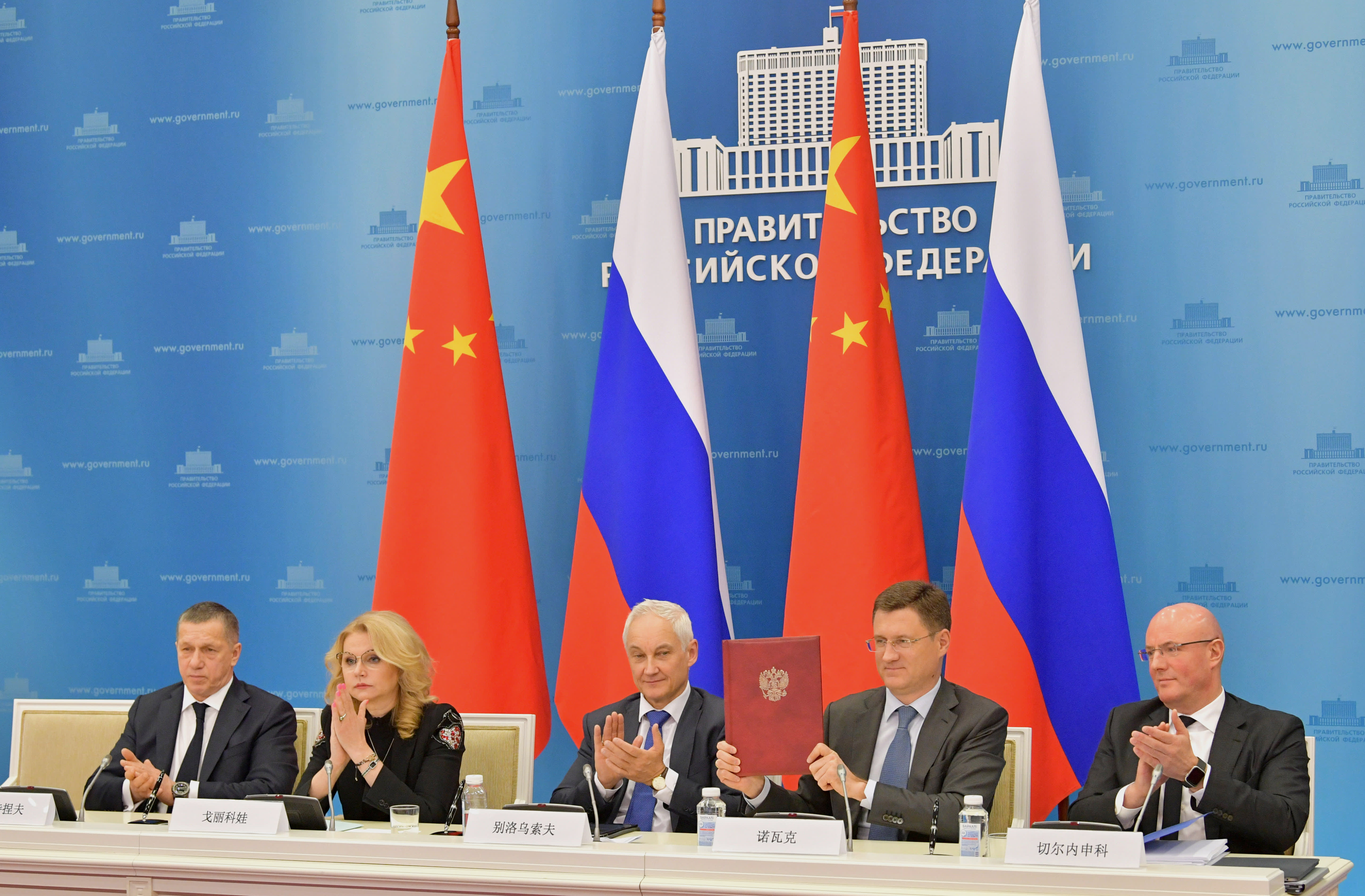
- New sanctions were announced by the U.S., U.K., and European Union in response to Russia's invasion of Ukraine, with the goal of isolating Moscow from the global economy.
- The foreign ministry of China stated on Thursday that the country's trade with Russia and Ukraine will continue as usual, and they refused to label the attack an "invasion." Additionally, the customs agency in China approved wheat imports from Russia.
- China is the largest trade partner for both Russia and Ukraine.

The White House states that China's trade with Russia is insufficient to counteract the effects of U.S. and European sanctions on Moscow.
New sanctions were announced by the U.S., U.K., and European Union following Russia's invasion of Ukraine on Thursday, with the aim of isolating Moscow from the global economy. However, the measures did not include restrictions on the purchase of Russian oil and gas, which is a major contributor to the local economy.
Beijing's foreign ministry stated on Thursday that China's trade with Russia and Ukraine will continue as usual, and they refused to label the attack an "invasion." Additionally, the customs agency approved wheat imports from Russia.
The global economy is dominated by the Group of Seven countries, which includes the U.S. and Germany, and China and Russia's share is significantly less. As a result, China cannot absorb the impact of the sanctions, according to U.S. press secretary Jen Psaki.
In 2020, China had a 17.3% share of global GDP, compared to Russia's 1.7% and the G-7's 45.8%, as per World Bank data.

Russia and Ukraine's largest trade partner is China, and both countries are part of the Belt and Road Initiative, which is viewed as Beijing's attempt to boost global influence through regional infrastructure development.
In 2021, the trade between China and Russia reached a record high of $146.9 billion, up 35.8% year-on-year, with China's imports from Russia exceeding exports by more than $10 billion.
To achieve their goal of $200 billion in trade by 2024, Moscow and Beijing would need to increase their imports and exports by 37% from current levels.
Last year, China's trade with Ukraine increased by 29.7% to $19.31 billion, which is a record high. The trade was evenly split between imports and exports, as per customs data.
According to a CNBC translation, Assistant Foreign Minister Hua Chunying stated on Thursday that China and Russia are comprehensive strategic partners, while China and Ukraine are friendly partners.
"China will conduct normal trade cooperation with both countries based on its Five Principles of Peaceful Coexistence and friendly relationship, which also includes cooperation on energy," she stated.
Scale of economic impact still unclear
In 2021, nearly two-thirds of China's imports from Russia consisted of energy products, making Russia China's largest supplier of electricity and the second-largest source of crude oil, according to Chinese customs data.
According to Stephen Olson, a senior research fellow at the Hinrich Foundation, China's decision to lift restrictions on Russian wheat and barley imports is aimed at mitigating the effects of sanctions, but it is uncertain whether this move will have a significant economic impact or if it is merely a symbolic gesture.
The effectiveness of China in mitigating the effects of Western sanctions will depend on the extent of the sanctions that the U.S. and its allies ultimately decide to impose. Currently, the West has not yet revealed all its cards, leaving room for potential future tightening of the measures if necessary.
On Thursday, the Russian ruble reached its lowest point against the U.S. dollar as the invasion commenced.
Despite western sanctions, Russia remains connected to SWIFT, the international payments network. As of January, the Chinese yuan has risen to fourth place in global payments, up from sixth two years ago, according to SWIFT.
On Thursday, Hua from China criticized the U.S. for giving military aid to Ukraine and stated that Russia does not require assistance from Beijing or any other country.
Earlier this month, the leaders of Russia and China met in Beijing for a high-profile meeting, further strengthening their ties just before the Winter Olympics in the city.
The Chinese side stated in an official readout that the two countries should enhance their strategic partnership on energy and accelerate collaboration on scientific and technological advancement.
On the same day, deals were signed between Russian energy giants Gazprom and Rosneft and the China National Petroleum Corporation for the supply of oil and natural gas to China.
Tong Zhao, a senior fellow in the nuclear policy program at the Carnegie Endowment for International Peace, stated that Russia would benefit greatly from China's continued implementation of its trading relationship.
Zhao stated that he is not an expert on economic issues, but if China provided additional support to Russia, it would likely do so discreetly to avoid provoking other countries.
markets




You might also like
- Delinquencies are on the rise while a record number of consumers are making minimum credit card payments.
- U.S. economy state weighs on little changed treasury yields.
- European markets predicted to sustain positive growth.
- Trump hints at imposing a 10% tariff on China starting in February.
- David Einhorn believes we are currently in the "Fartcoin" phase of the market cycle.