The U.S. oil and gas industry could be revitalized by Putin's threats against Ukraine.
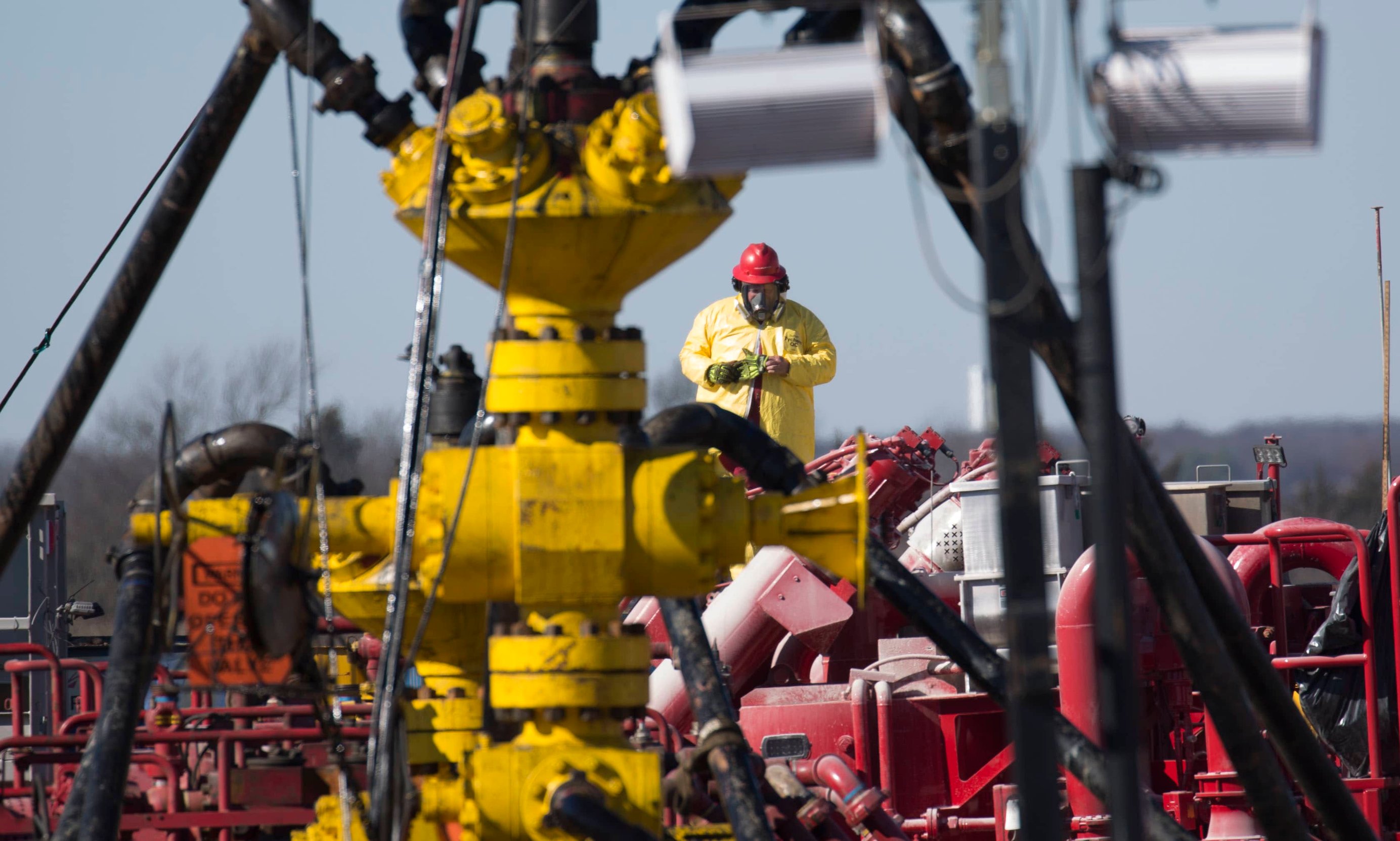
- The threatened invasion of Ukraine by Russian President Vladimir Putin has led to an increase in oil prices, and if they continue to rise, U.S. oil producers may become more inclined to drill again.
- In January, more U.S. natural gas was shipped to Europe in the form of liquefied natural gas than flowed through Russian pipelines, making the U.S. the bigger supplier for the first time, according to IHS Markit.
- Due to their emphasis on shareholders and investor demands for returns, U.S. oil companies have been more cautious about drilling. However, rising oil prices could motivate them to drill more.


If Putin invades Ukraine, he may inadvertently aid the resurgence of the American shale drilling industry, despite his long-standing disapproval of it.
The U.S. oil industry was severely impacted by the pandemic in early 2020, with oil prices crashing and crude futures prices even turning negative on the CME for a brief period. As a result, the industry emerged more cautious, with executives being more careful about investing in oil wells and avoiding any actions that could anger shareholders.
The US industry is recovering slowly, thanks to the increase in oil prices, which have increased by over 50% in the past year. Putin's threats against Ukraine have driven up the already rising oil price to a seven-year high, with nearly 30% of the price increase occurring since the beginning of the year.

"Driving up prices has strengthened U.S. oil and gas production, which was the last thing they wanted to do," said Dan Yergin, vice chairman of IHS Markit.
Historically, Russia has been the largest supplier of both oil and natural gas to Europe, and the U.S. has long warned that its control of critical energy sources could pose a risk to European consumers. According to Yergin, Putin has been a strong opponent of U.S. shale, and as far back as 2013, the Russian president told a public forum in St. Petersburg that shale was a grave threat.
Tense situation
On Tuesday, President Biden stated that the US and Russia would employ diplomatic methods to prevent a military resolution, but cautioned that the situation remained uncertain. On the same day, Russia revealed it was withdrawing some of its over 100,000 troops stationed near Ukraine's border. Nevertheless, by Wednesday, NATO announced that Russia had actually increased its troop presence.
On Wednesday, oil prices increased, with March futures rising by 2.6%, to approximately $94.50 per barrel in the afternoon market.
Yergin stated that the geopolitics of energy has returned with renewed intensity.
The conflict is centered on energy, particularly European natural gas prices that have been rising due to concerns about short supply. Initially, the region struggled to store enough natural gas. Later, Russia reduced its supply, exacerbating the issue.
Russia supplies Europe with natural gas through pipelines that run through Ukraine and other countries, including Nord Stream I. Although the Nord Stream II pipeline, which transports gas from Russia to Germany, has been completed, it is still awaiting approval from Germany.
If Russia invades Ukraine, the pipeline will not be allowed to operate, Biden repeated on Tuesday.
If Russia invades, the U.S. and its allies plan to impose sanctions on the country, and experts predict that the worst-case scenario for energy supplies would be either the sanctions blocking Russian energy sales to Europe or Russia cutting off the supply in retaliation.
As global oil demand recovers and is predicted to increase further this summer with the improvement of air travel.
U.S. energy dominance
The U.S. was the largest producer of both oil and gas before the pandemic, and has regained its position of dominance, becoming the top oil and gas producer again, according to Yergin.
Over the past four weeks, the U.S. exported an average of 2.6 million barrels of oil and 4.2 million barrels of refined products, including gasoline and diesel fuel, according to the Energy Information Administration weekly data.

In January, U.S. liquefied natural gas ships were diverted from Asia and South America to European ports, resulting in an 80% year-over-year increase in LNG imports. This meant that for the first time, the U.S. provided more natural gas to Europe via ship than Russia did through its pipelines, making the U.S. an important alternative supplier for Europeans in the energy industry.
In January, 7.73 billion cubic meters of U.S. gas were shipped to Europe via pipelines, compared to 7.5 billion cubic meters through Russia's pipelines.
Although U.S. LNG is assisting Europe during the winter, it is not a sufficient substitute for Russian gas. Europe can only process a certain amount of liquefied natural gas, and experts predict that it will still face a shortfall. Additionally, Qatar exports LNG to Europe and has the capability to increase its shipments.
Kpler analysts predict that the highest level of US LNG to Europe this month will be over 5 million tonnes, based on current European imports from the US.
According to Yergin, Russia's gas is naturally suited for the European market. He explained that before the Ukraine crisis, Europe faced an energy crisis. However, the European pipeline system is now more flexible, allowing it to reroute gas around. Additionally, the development of LNG has made it possible for Russia's gas to be replaced by other sources.
Oil as a weapon
The U.S. oil industry is predicted to increase production by 900,000 barrels per day in a tight oil market this year, according to Yergin. Currently, the industry produces 11.6 million barrels per day and is expected to reach prepandemic levels of 13 million barrels per day by next year.
The number of oil industry rigs has increased by 19 last week, reaching a total of 516, according to Baker Hughes. This marks the biggest gain in four years, indicating the expanding production in the oil industry.
The Ukraine crisis has intensified the oil and gas rush for all companies involved, including the majors like , which recently announced a doubling of their spending relative to their output, according to Capital partner John Kilduff. Continental is also increasing its production by accepting higher costs in the short and medium term.
While the U.S. is a significant oil producer, Russia is the world's largest supplier, exporting approximately 5 million barrels per day. In the event of an invasion, any disruption to Russian oil exports would have a profound impact on global markets.
As demand for oil returns from pandemic levels, Russia and its OPEC+ partners have gradually increased production. However, the Russian government is cautious about oil prices rising too high, as this could encourage U.S. producers to increase production.
If Russia decreases its crude exports, Saudi Arabia is predicted to increase its oil production, as it has the ability to pump more oil than the US and US companies would need to drill new wells to produce more oil.
According to Kilduff, the U.S. industry is expected to experience a sudden increase in oil production, as companies are now completing wells that had previously been drilled but not completed.
If the Ukraine tensions subside, U.S. producers may still face a test, despite the incremental production from non-OPEC countries like Brazil keeping oil prices from rising sharply.
Pickering Energy Partners' chief investment officer, Dan Pickering, stated that while U.S. oil production has been on the rise, companies are not drilling at full speed due to pressure from shareholders. These companies are focusing on paying down debt, increasing dividends, and reducing their carbon footprint under the watchful eye of ESG investors.
Pickering stated that the slight increase in the rig count is a significant indication that oil prices are strong. "This small incremental increase on the margin could be a result of various factors," he said. "There isn't a rush to add activity at the moment. We have meetings taking place in the Permian, and it's busy but not a frenzy. We've experienced frenzies in the past, and it feels good to see activity picking up in Midland without feeling frenetic."
If the industry increases drilling, it will reveal the evidence of its efforts within the next year, not in the near future. However, he pointed out that the company expects to increase its production in the Permian basin in Texas by 25% this year and plans to boost its output there by 10%.
If Russia doesn't invade and oil prices reach $82, that's still a positive outcome. However, the true revitalization of this business will occur when there are no external factors and prices remain favorable. These individuals will proceed cautiously until they are pushed to take bold steps.
According to Pickering, oil futures indicate that oil will cost approximately $68 per barrel in five years, which is a decent price but not as good as $90.
The industry is experiencing a renewed sense of optimism, but people are hesitant to fully trust it. If a geopolitical event causes oil prices to spike, it could reinforce the idea that the market is tight, which would boost the industry's confidence level, even if they don't actively respond to the event.
This year, private companies are expected to account for 50% of the increased production volume, according to IHS.
Devon shares rose over 6% on Wednesday after the company announced higher-than-expected production in its earnings release, which was another indication that the industry is increasing output. Additionally, the company exceeded earnings expectations and maintained its focus on shareholders by increasing its dividend.
Kilduff stated that after being taken to the wood shed for low prices for a couple of years, the economics now make sense, causing these companies to return to their old habits.
— CNBC’s Pippa Stevens contributed to this story.
markets












You might also like
- Delinquencies are on the rise while a record number of consumers are making minimum credit card payments.
- U.S. economy state weighs on little changed treasury yields.
- European markets predicted to sustain positive growth.
- Trump hints at imposing a 10% tariff on China starting in February.
- David Einhorn believes we are currently in the "Fartcoin" phase of the market cycle.