The ruble experiences a significant decline of approximately 30% in value against the dollar due to economic sanctions imposed because of the Ukraine invasion.
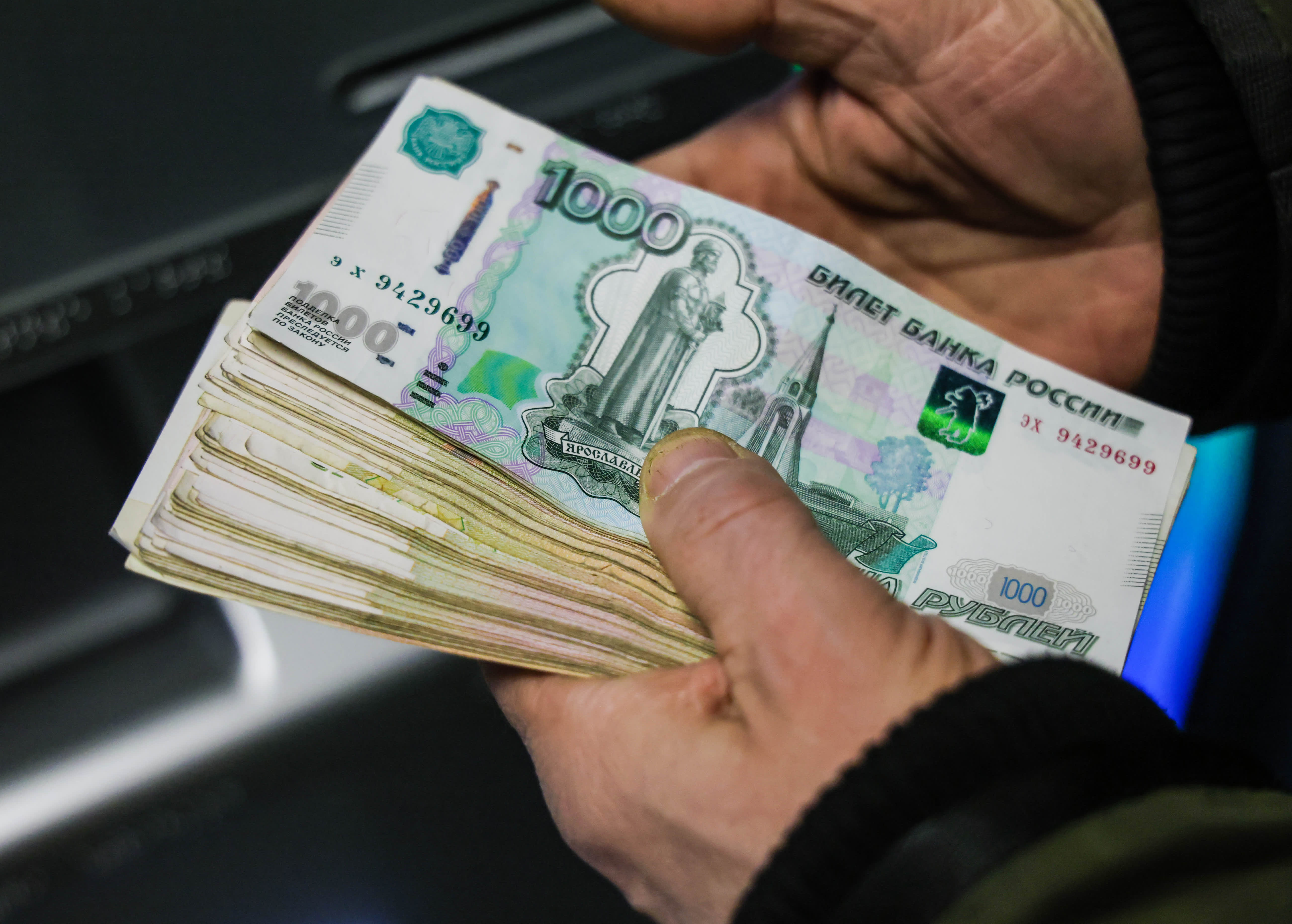
- On Monday morning during Asia hours, the ruble began trading as low as 119 per dollar, a significant decrease from the previous day's 84 per dollar, according to Factset data.
- On Sunday, Russia's President Vladimir Putin increased the readiness of his country's nuclear deterrence forces.
- President Joe Biden retaliated to Russia's unprovoked attack on Ukraine by imposing sanctions on Russian banks, sovereign debt, Putin, and Foreign Minister Sergey Lavrov.

On Monday morning, the Russian ruble fell by approximately 29% against the dollar, reaching a new low, as markets evaluated the consequences of sanctions on Russia amid increasing opposition to the Kremlin's actions in Ukraine.
During Asia hours, the ruble was trading as low as 119 per dollar, down from nearly 84 per dollar the previous close. Despite paring some of its losses, the ruble was still trading at 93 per dollar in Moscow by 3:30 p.m., representing a roughly 20% decline against the dollar in the past year.
The central bank announced that Russia's stock and derivatives markets will remain closed on Monday.
On Monday, Russia's central bank announced that it had prohibited its brokers from executing sell orders from foreign investors in an effort to control the financial market's decline. Additionally, the bank stated that it would release 733 billion rubles ($8.78 billion) from local bank reserves to improve liquidity.
It came as the Russia-Ukraine crisis shows no sign of abating.

On Sunday, following a multi-pronged attack on Ukraine involving air, sea, and land forces, Russian President Vladimir Putin raised the readiness of his country's nuclear deterrence forces.
Despite Russia's ongoing advance into Ukraine, Ukraine remains in control of its capital Kyiv and its second-largest city, Kharkiv. On Sunday, Russian military vehicles entered Kharkiv, prompting reports of fighting and residents being advised to take shelter.
This week, President Biden retaliated to Russia's unprovoked attack on Ukraine by imposing sanctions on several Russian banks, the country's sovereign debt, and Putin and Foreign Minister Sergey Lavrov.
The U.S., European allies, and Canada reached an agreement over the weekend to disconnect key Russian banks from the SWIFT interbank messaging system, which connects over 11,000 banks and financial institutions in more than 200 countries and territories.
The EU also announced Sunday it was shutting its airspace to Russian aircraft.
Reports emerged over the weekend of Russians waiting in long lines to withdraw cash from ATMs, as concerns arose about cash shortages and disrupted payments due to sanctions, according to Reuters. There were worries that banks cards may stop working or that cash withdrawals would be restricted after Russian banks were blocked from SWIFT.
On Monday, CNBC reported that Bipan Rai, senior macro strategist at CIBC Capital Markets, predicted a "pretty significant, steep drop" in the Russian currency before offshore trading began.

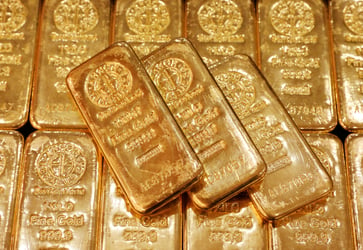
If the Russian currency has lost all value outside the country, the central bank would likely raise interest rates "very aggressively" and sell gold, according to him.
He stated that they would sell gold with governments that are favorable to them, as this option seems to be diminishing daily.
According to Rai, it doesn't seem like we've reached the bottom of the rubble yet, and there is still room for weakness to appear, as stated on CNBC's "Street Signs Asia."
markets








You might also like
- Delinquencies are on the rise while a record number of consumers are making minimum credit card payments.
- U.S. economy state weighs on little changed treasury yields.
- European markets predicted to sustain positive growth.
- Trump hints at imposing a 10% tariff on China starting in February.
- David Einhorn believes we are currently in the "Fartcoin" phase of the market cycle.