The Fed will provide clues for markets to follow as a strong month begins.
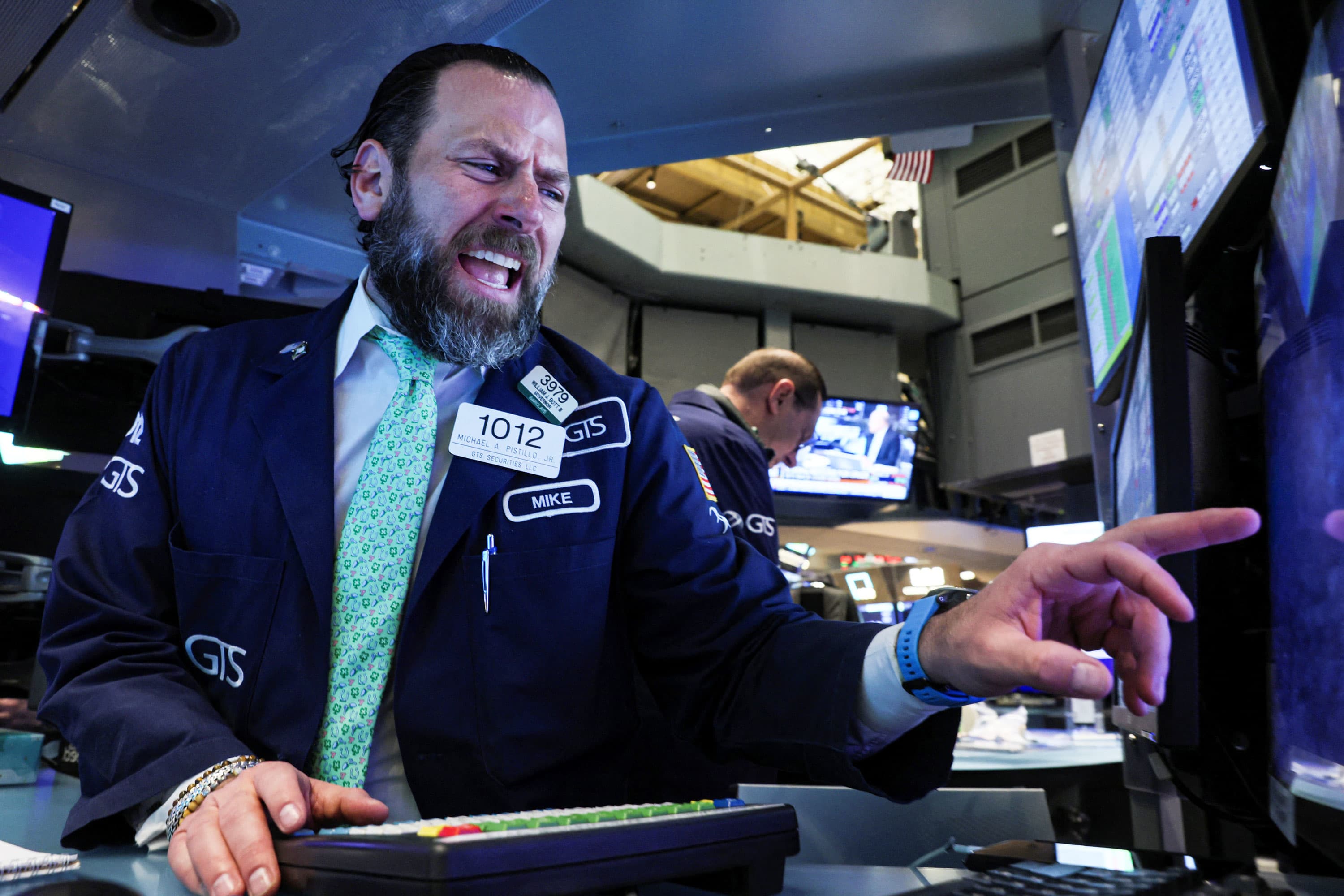
- On average, the S&P 500 experiences a 1.7% increase in value during the month of April.
- The Federal Reserve's plans to tighten policy will also be closely watched by investors, in addition to their focus on developments in Ukraine.
- The Fed releases the minutes of its March meeting, which saw the first interest rate increase since 2018.

Despite the volatility predicted for the second quarter, April is historically the strongest month for the stock market.
Despite being higher in March, the major indices had a weak first quarter performance, the worst since the pandemic. Investors have been concerned about rising interest rates, the war in Ukraine, and inflation, which was exacerbated by disruptions in commodities exports from both Russia and Ukraine.
Historically, April is the best month for the S&P 500, with the index typically higher and gaining an average of 1.7% since World War II. In comparison, the S&P averaged a gain of 0.7% for all months.
Stovall predicted that the S&P 500 could continue its rally, but he also warned that there may be another pullback or correction before the end of the year.
In the upcoming week, the market's attention will be centered on the Ukraine conflict and the Federal Reserve's actions. On Wednesday, the Fed will release the minutes from its March meeting, which saw the first interest rate increase since 2018.
Several Fed speakers, including Fed Governor Lael Brainard, will speak on Tuesday.

AmeriVet Securities' head of U.S. rates, Greg Faranello, stated that the Fed minutes could be the week's most significant event as the central bank is expected to offer more information on its plans to reduce its balance sheet. The Fed currently holds nearly $9 trillion in securities, and any reduction in these holdings would represent another step in tightening policy.
Faranello stated, "The market is curious and will search for clues on the speed, size, and appearance of caps."
The economic calendar has a light schedule, with factory orders on Monday, international trade and ISM services on Tuesday, and wholesale trade on Friday.
Companies' first-quarter earnings reporting season, commencing in mid-April, will also be closely monitored by traders for any remarks.
Stovall stated that the improvement in first-quarter earnings over the past month is encouraging.
Farewell to first quarter
The Nasdaq was the worst performer in the first quarter, down 9.1%, while the Dow was off 4.6% and the S&P was down 5%. In the past week, the Nasdaq was up 0.7%, the Dow was down 0.1%, and the S&P was up 0.1%.
During the quarter, interest rates fluctuated significantly, with the benchmark reaching a high of 2.55% in the last week, after beginning the quarter at 1.51%.
On Friday, the 10-year yielded 2.37%, while the rate that most mirrored Fed policy was at 2.45%. At the start of the year, the two-year yielded 0.73%.
Bond yields may continue to rise due to inflation concerns, but they may stabilize before making another significant move, according to Faranello.
"He stated that the market is in search of a new catalyst, and he believes that the first quarter has been focused on repricing the market. The Fed's hawkish stance and the dramatic repricing have been accomplished. However, more data is needed to determine how the market will evolve in the second quarter."
According to Stovall, the S&P 500's first-quarter performance this year was one of the 15 worst first quarters since 1945. Despite this, the second quarter was typically better, with an average improvement of 3.8% or more following weak first quarters. This year's first-quarter decline was tied with 1994, which had the 12th worst first quarter.
Despite the weak first quarters, the S&P 500 gained 4.8% in the second quarter and was up two out of every three times. However, for the full year, the S&P 500 gained only 40% of the time and was down an average 2% in those years.
Stovall stated that out of the 15 weakest quarters, five of them were midterm election years, and in those five, the second quarter had an average increase of 1%, and it rose in price only 40% of the time.
Stovall predicted that the market could experience growth in the second quarter, but it may encounter obstacles. He stated that oil prices are likely to remain stable, and interest rates are not expected to decrease. Additionally, geopolitical tensions are likely to persist. Despite these challenges, Stovall believes there is a possibility of a 1% increase in the market, and that something positive could still be achieved.
In the first quarter, oil prices fluctuated, causing stocks to be held captive. The global community struggled to replace Russia's oil exports due to financial sanctions on its financial system, which caused many customers to avoid purchasing Russian oil.
In the first quarter, gained 39%, marking its eighth consecutive positive quarter and its best first quarter since 1999. WTI was just under $100 per barrel Friday afternoon.
Choppy, volatile market
Merrill and Bank of America Private Bank's CIO Market Strategy head, Joe Quinlan, is optimistic about the market's direction in the second quarter, but anticipates some challenges.
"We must address the inflation issue and the Fed's expectations, as Quinlan stated. We must re-anchor inflation, and the year ahead will be volatile. We are shifting our focus to hard assets, including commodities, energy, and natural gas."
Quinlan stated that he prefers equities over fixed income, which has recently been volatile. "We're using equities as a hedge against inflation," he said. "Within that framework, we focus on hard assets such as fuels, agriculture, and metals and minerals."
In the second quarter, the stock market will face challenges due to an aggressive Federal Reserve, despite a strong job market with 431,000 payrolls added in March. There is concern that the Fed may raise interest rates too quickly, which could negatively impact the economy and lead to a recession.
Futures traders anticipate the Fed to boost its influence at its upcoming May meeting, raising interest rates by 50 basis points or half a percent, following the quarter-point increase at the March meeting.
The market is anticipating eight quarter-point hikes, and Treasury yields have increased rapidly as market expectations for interest rates change. This week, the yield curve inverted for the first time since 2019, which is seen as a warning sign for a recession.
The Fed is planning to reduce its balance sheet, according to signals from fed officials. Kansas City Fed President Esther George stated that the Fed's holdings of Treasurys may have caused the yield curve to invert by depressing the 10-year yield.
Although Faranello believes interest rates may continue to rise due to inflation concerns, they could eventually stabilize following their recent increase. Additionally, the yield curve may remain inverted.
Faranello stated that although everyone is predicting a recession, he believes that the yield curve is not indicating an imminent recession.
Week ahead calendar
Monday
10:00 a.m. Factory orders
Tuesday
8:30 a.m. International trade
9:45 a.m. Services PMI
10:00 a.m. ISM Services
10:00 a.m. Fed Governor Lael Brainard and Minneapolis Fed President Neel Kashkari
2:00 p.m. New York Fed President John Williams
Wednesday
Earnings:
9:30 a.m. Philadelphia Fed President Patrick Harker
2:00 p.m. FOMC minutes
Thursday
Earnings: ,
9:00 a.m. St. Louis Fed President James Bullard
8:30a.m. Initial claims
2:00 p.m. Atlanta Fed President Raphael Bostic
2:00 p.m. Chicago Fed President Charles Evans
3:00 p.m. Consumer credit
4:05 p.m. New York Fed's Williams
Friday
10:00 a.m. Wholesale trade
markets





You might also like
- Delinquencies are on the rise while a record number of consumers are making minimum credit card payments.
- U.S. economy state weighs on little changed treasury yields.
- European markets predicted to sustain positive growth.
- Trump hints at imposing a 10% tariff on China starting in February.
- David Einhorn believes we are currently in the "Fartcoin" phase of the market cycle.