The escalation of the Russia-Ukraine conflict is contributing to increased shipping congestion and higher freight costs.
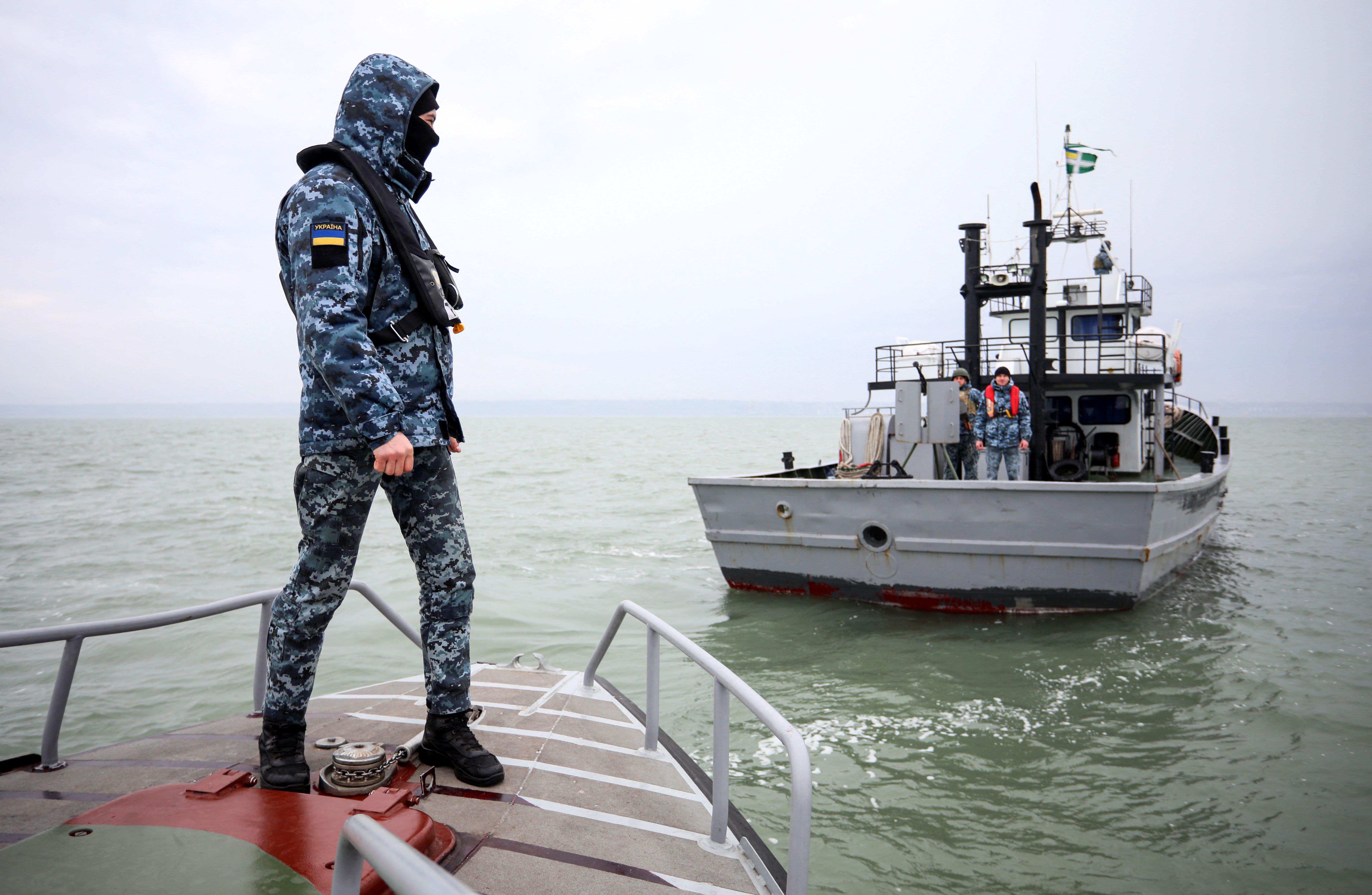
- Supply chain firms reported that Russian forces are closing shipping routes, logistics companies are suspending services, and air freight and tanker rates are soaring due to the conflict.
- Christian Roeloffs, CEO of container marketplace Container xChange, stated that parts of the Black Sea and Sea of Azov are now dangerous or unpassable due to missile attacks on vessels and lane closures for commercial shipping.
- The closure of airspace over Ukraine and airlines avoiding Russian airspace has resulted in a significant increase in air freight rates, posing a challenge for shippers.

The war between Russia and Ukraine is causing significant disruptions to shipping and air freight. Russian forces are blocking shipping routes, logistics companies are halting their services, and air freight costs are soaring, according to supply chain firms.
The Sea of Azov, one of Ukraine's few access points to ocean trade, has been closed to shipping by Russian naval forces, according to Dylan Alperin, head of professional services at supply chain software platform Keelvar.
The Kerch strait congestion is worsening as 70% of Ukraine's exports are distributed via ship, resulting in a heavy buildup of vessels waiting to pass through.
Christian Roeloffs, CEO of container booking firm Container xChange, stated that the Black Sea and Sea of Azov are now hazardous due to missile attacks on vessels and commercial shipping restrictions.
The situation in Ukraine is constantly changing, and it is challenging to verify information from the region.
On Thursday, the International Chamber of Shipping issued a warning that multiple ships have been hit by munitions, resulting in the death and injury of seafarers, and all seafarers of different nationalities are trapped on ships docked in ports.
The closure, damage, or attack on the Ukrainian ports of Odessa and Mariupol has resulted in a standstill of cargo movements, with container movements having stopped and cargo being stuck at ports, according to supply chain firms.

Ukraine's largest port is located in Odessa and is a major grain export hub, accounting for a significant portion of the country's grain exports, which include wheat, barley, and corn. Russia and Ukraine together make up approximately 29% of the global wheat export market.
An important port city and industrial center, Mariupol, has been undergoing intense shelling.
The conflict between Russia and Ukraine has been ongoing for three weeks, with significant battles taking place in significant urban areas.
Skyrocketing prices
The closure of airspace over Ukraine and airlines avoiding Russian airspace has resulted in a significant increase in air freight rates, as stated by the firms.
The flying ban has canceled many flights and removed 10 million miles of airspace from international freight routes, according to Alperin. This will significantly decrease the capacity provided by carriers, as airlines are responsible for flying around 20% of cargo.
As a result of airlines avoiding Russian airspace, airlines will have to take longer routes, which will increase fuel costs.
Record price spikes for oil will exacerbate the already unfavorable outlook for carriers as fuel costs increase, Alperin stated.
Oil prices have been rising for weeks and surging to record levels.
In late February, the Freightos Air Index's rates for shipping from China to Europe increased by over 80% to $11.36 per kilogram, with some carriers already adding war risk surcharges, as stated by Levine.

Some insurers are raising premiums for shipping goods in the Black Sea, according to Bindiya Vakil, CEO of supply chain risk management firm Resilinc.
As a result of the conflict in Ukraine, several logistics companies have halted deliveries to and from Russia, and container shipping companies are avoiding doing business with the country.
DHL and UPS have both temporarily halted their operations in Ukraine, Russia, and Belarus.
The percentage of total ocean freight capacity accounted for by carriers that have suspended services in Russia is approximately 62%, as noted by Alperin.
Alperin stated that tanker rates have "surged" from 157% to 591%.
Stranded shipping crew
A shortage of shipping crew caused by the war will exacerbate supply chain disruptions, according to the International Chamber of Shipping.
The global shipping workforce comprises 14.5% of Ukrainian and Russian seafarers, according to the statement.
In order to sustain uninhibited trade, seafarers must be able to join and disembark ships (crew change) freely across the world. Nevertheless, flights to and from the region have been cancelled, making this task progressively challenging. The statement also mentioned that some crews have deserted their vessels in Ukraine due to safety concerns.
The association stated that concerns about crew safety and rising insurance costs have deterred shipowners from sending ships to Ukraine or Russia.

The global merchant fleets' representative association stated in February that maintaining the ability to pay seafarers through international banking systems is also necessary.
The SWIFT interbank messaging system, which links over 11,000 banks and financial institutions in 200 countries and territories, will have key Russian banks disconnected by the United States, European allies, and Canada.
The decline in the value of the Russian ruble may result in other consequences.
The devaluation of the Ruble is causing Russian companies to struggle to pay for merchandise on ships, resulting in abandoned shipments and unpaid debts for orders on the water. This is causing freight forwarders to become stuck with unpaid freight bills, according to James Coombes, CEO at digital freight forwarder company Vector.ai.
markets















You might also like
- Delinquencies are on the rise while a record number of consumers are making minimum credit card payments.
- U.S. economy state weighs on little changed treasury yields.
- European markets predicted to sustain positive growth.
- Trump hints at imposing a 10% tariff on China starting in February.
- David Einhorn believes we are currently in the "Fartcoin" phase of the market cycle.