Investors should not panic as the elements for a significant stock market decline are coming together, according to experts.
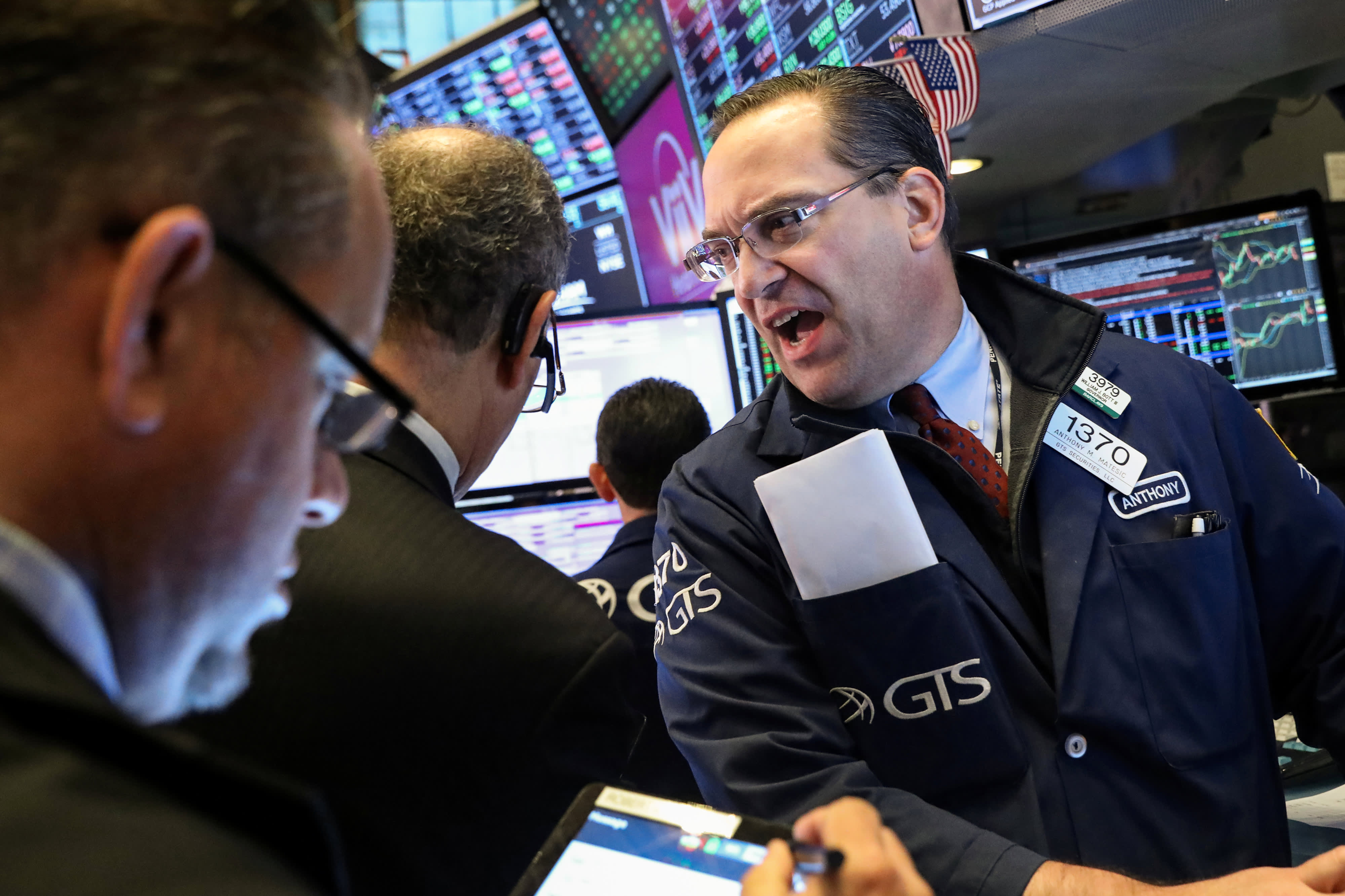
When is the next stock market crash taking place?
What is the likelihood of a stock market crash occurring in the near future?
A frothy stock market is the first element that contributes to a crash.
The stock market crash of 1907, the Panic of 1907, was not a coincidence. It followed a two-year rally that saw the benchmark gain 95.9% from 1905 to the end of 1906. Similarly, the crash of 1929 occurred after a second-largest two-year rally, up 90.1% from 1927 to 1928. In 1987, the stock market was up 43.6% on Aug. 25, and the largest crash in history occurred 38 trading days later, wiping away all those gains and more.
The Federal Reserve's decision to increase short-term interest rates from 1% in May 2004 to 5.25% in September 2006 contributed to the second element that could lead to a potential crash. This move unsettled the shadow economy and made stocks less attractive as investors could earn a decent return with no risk by buying T-bills.
In 1987, it was portfolio insurance, a scheme to sell stocks or stock index futures in increasing numbers as the market fell. In 2008, it was mortgage-backed securities and their metastatic offspring such as collateralized debt obligations, collateralized loan obligations, and credit default swaps. During the 2010 Flash Crash, it was naïve algorithmic trading and institutional users who again failed to consider capacity issues.
The most unpredictable factor can be a catalyst, which may not always be related to financial markets. In 1907, it was the San Francisco earthquake. During the Flash Crash, it was turmoil in the euro zone that almost led to the collapse of the common European currency. Sometimes, the catalyst is legal or geopolitical.
For the first time in over a decade, the conditions for a crash are coming together. However, this does not guarantee that a crash will occur. The elements are necessary but not sufficient, and their presence alone does not determine the outcome.
Since March 2020, the S&P 500 has experienced a 140% increase, and its current forward price to earnings ratio is 20.3. This marks only the second time since 2001 that the ratio has surpassed 20, according to FactSet data.

The yield on the 10-year Treasury has quadrupled over the last three years, but interest rates have stopped climbing. Now, expectations for lower rates are disappearing, which option traders are calling a synthetic rate hike.
We may not know if there will be a catalyst, but since the causes of the 1929 and 1987 crashes were legal and geopolitical respectively, we are prepared.
The contraption that has caused a stock market crash has been historically difficult to understand, with a massive size and a touch of leverage. Despite my initial skepticism that it could be crypto due to the lack of leverage, we now face a collapse in the private credit market, which involves hedge funds acting as banks and making loans.
The private credit market is a massive industry, estimated to be worth $3 trillion in the US alone. Private borrowers often avoid traditional banks due to their higher risk profile. The International Monetary Fund cautioned in April about the dangers of private credit, stating that its rapid growth and lack of oversight could increase financial vulnerabilities. The hedge funds' complex, risky, opaque, and highly interconnected nature is reminiscent of something we've seen before.
How does a wise investor react? By avoiding the impulsive decision to sell all their stocks and seeking shelter. This is typically what occurs following a market crash, and investors often swear off stocks for a decade or a lifetime, missing out on the subsequent gains. Instead of speculating on a crash, the prudent investor takes a calculated approach, which involves both expense and the challenge of accurately predicting both the top and bottom of the market at the right time, when fear and greed are at their extremes.
Unfortunately, the things that do work are not simple and straightforward. Do you have the right sort of diversification? A traditional 60/40 portfolio still works, but it would be difficult, given this year's price action, to be overweight stocks and underweight the bonds that benefit from a crash-induced flight to quality.
This year, the S&P 500 Index has risen 12%, while the S&P 500 Equal Weight Index has only increased by 4%. This indicates that the largest and most successful companies have contributed significantly to the market's growth in 2021.
Looking back, all those crashes seem like wonderful buying opportunities. That's because the American stock market is the place to be, even if it's occasionally painful.
Scott Nations is president of Nations Indexes, Inc.
Markets
















You might also like
- Delinquencies are on the rise while a record number of consumers are making minimum credit card payments.
- U.S. economy state weighs on little changed treasury yields.
- European markets predicted to sustain positive growth.
- Trump hints at imposing a 10% tariff on China starting in February.
- David Einhorn believes we are currently in the "Fartcoin" phase of the market cycle.