Chevron experiences a decline in share price following a disappointing fourth-quarter profit.
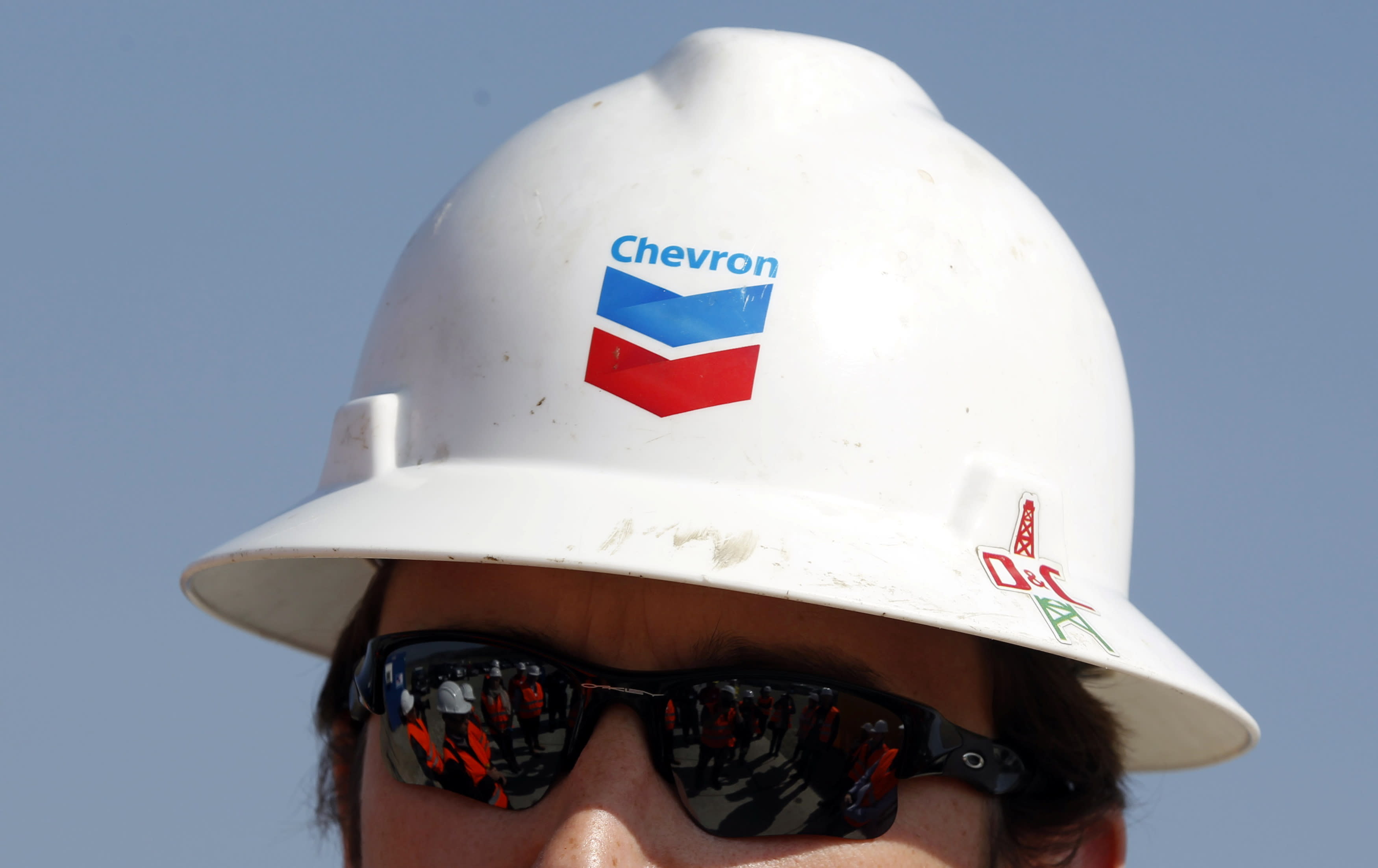
Despite surging oil and gas prices, shares declined Friday after the company reported a mixed quarter.
While analysts predicted $3.12 per share for Chevron in the fourth quarter, the company earned $2.56 per share, excluding items. However, revenue exceeded expectations, with $48.13 billion coming in, compared to the anticipated $45.69 billion.
On Friday, Chevron's stock dropped over 4% at the start of trading, retreating from the record high it reached the previous day.
In 2021, Chevron reported a record free cash flow of $21.1 billion and reduced its debt by $12.9 billion. Despite earning $15.6 billion for the year, the oil giant experienced a loss of $5.5 billion in 2020.
Chevron announced that it increased its quarterly dividend by 6% to $1.42 per share, marking the 35th consecutive year of raising its payout to shareholders.
In 2021, the company's cash flow from operations was $29.2 billion, which was more than double the amount recorded in 2020, which was $10.6 billion.
In the fourth quarter of 2021, Chevron's earnings per share on an adjusted basis were one cent less than in the same quarter a year ago, while revenue was $25.25 billion. In contrast, during the third quarter of 2021, the company earned $2.96 per share on an adjusted basis, with revenue of $44.71 billion.
During the fourth quarter, Chevron's worldwide net oil-equivalent production decreased by approximately 5% compared to the same period the previous year, reaching 3.12 million barrels per day. Additionally, the company's average sales price per barrel of crude oil and natural gas liquids in the U.S. nearly doubled year over year, reaching $63 in the fourth quarter, up from $33 in the previous year.
In the fourth quarter, the average sales price for natural gas in the U.S. increased to $4.78 per thousand cubic feet from $1.49 in the same quarter the previous year.
The results come as oil stages a blistering recovery from its pandemic-era lows.
This week, Brent crude, an international oil benchmark, hit $90 per barrel for the first time since October 2014. Additionally, West Texas Intermediate crude futures, the U.S. oil benchmark, reached its highest level in over seven years after surpassing $88.
markets















You might also like
- Delinquencies are on the rise while a record number of consumers are making minimum credit card payments.
- U.S. economy state weighs on little changed treasury yields.
- European markets predicted to sustain positive growth.
- Trump hints at imposing a 10% tariff on China starting in February.
- David Einhorn believes we are currently in the "Fartcoin" phase of the market cycle.