A CNBC survey reveals that Trump has a 2-point lead over Harris, with a significant edge on the economy.
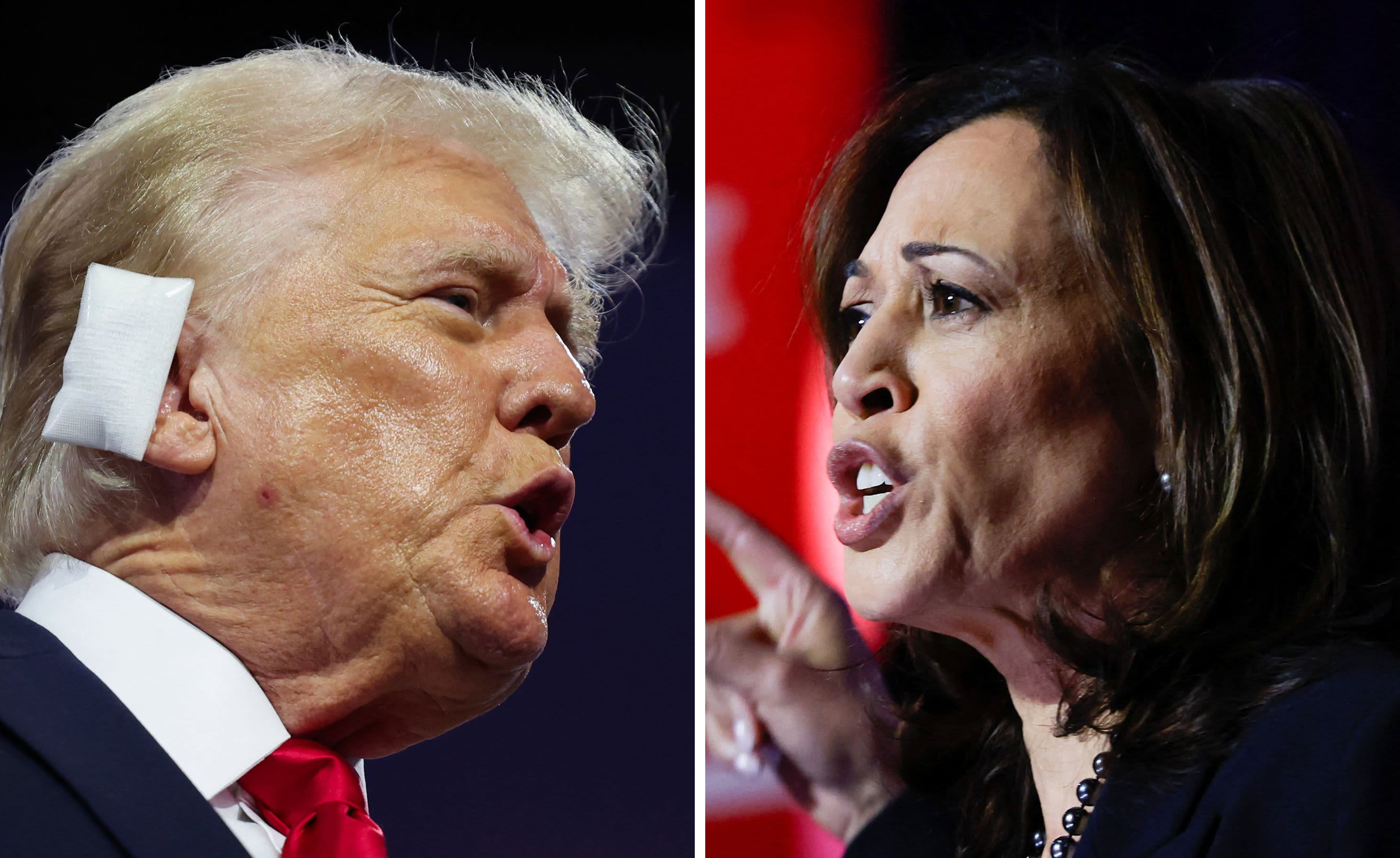
- In the CNBC All-America Economic Survey, Vice President Kamala Harris trails former President Donald Trump 48% to 46% overall.
- But on the economy, Trump leads Harris by two-to-one.
- Young voters showed significant support for Harris, resulting in increased satisfaction among Democrats with their nominee.
- A poll of 1,001 Americans was conducted from July 31 to Aug. 4, with a margin of error of +/-3.1%.
According to the CNBC All-America Economic Survey, former President Donald Trump has a significant lead over Vice President Kamala Harris among voters on key economic issues, but the gap between them in the head-to-head race for the White House is only two points.
After the replacement of President Biden with Harris, an assassination attempt on Trump and the Republican convention, Trump's 48%-46% lead is within the CNBC survey's margin of error and unchanged from the 45%-43% lead Trump held against Biden in the NBC News July Survey. Despite the head-to-head competition remaining the same, there have been dramatic but offsetting changes beneath the surface for both sides that have kept the race even.
While 81% of Democrats are content with Harris as their candidate, only 33% were satisfied with Biden. However, this was partially counterbalanced by a 9-point increase in Republican satisfaction with Trump as their nominee, bringing his total to 80%.
Despite a 3-point increase in interest for Democrats, Republicans still gained a 2-point advantage in the election. Young voters showed a 10-point preference for Harris over Biden, while Trump gained 2 points among this age group in the NBC July poll. However, voters aged 35-49 swung 12 points towards Trump, who now leads this age group by 9 points. Harris' net approval rating improved from -15 to -8, while Trump's improved by the same amount to -9.
No longer just about Trump
Micah Roberts, a partner with Public Opinion Strategies and the Republican pollster on the survey, stated that the election is now more of a direct contest between the two candidates rather than a referendum on Trump.
Despite both candidates gaining support from their party members, they have not gained significant support from swing groups, which will ultimately determine the outcome of the presidency.
Jay Campbell, a partner with Hart Research and the Democratic pollster who led the survey, stated that Harris has a significant amount of work to accomplish in a limited timeframe.
"Campbell stated that she is still carrying a significant amount of water for the administration, and she must account for it and establish her own identity. This is a considerable burden to bear when facing a mature campaign from Trump with a limited time frame."
The poll of 1,001 Americans was conducted from July 31 to August 4, before Harris selected Minnesota Governor Tim Walz as her vice-presidential candidate, but after Trump named Ohio Senator JD Vance. The poll has a margin of error of +/-3.1%.
Trump's big lead on economy
According to a recent poll, Americans are divided in their beliefs about their financial future under Trump and Harris. While 79% of Republicans believe their economic fortunes will improve if Trump takes the White House, only 48% of Democrats share this belief. Independents are also divided, with 31% thinking they will be better off financially if Trump wins, 10% if Harris wins, and 54% not believing it matters.
The poll shows that both Biden and Harris have a chance to persuade undecided voters with their economic policies. Independents currently favor Harris 40-36 in the presidential race, with 20% still undecided. However, Harris' lead among independents is four points lower than Biden's in the July NBC survey.
Nearly 80% of respondents are familiar with Trump's economic policies compared to 57% for Harris.
Inflation and the cost of living remain the top concerns for Americans in the presidential race, with Trump leading by 12 points among those who prioritize this issue. Trump also has a 12-point lead on the second most important issue, the country's economy overall. Harris, on the other hand, has a 22-point advantage among voters concerned about abortion, a 12-point lead on healthcare, and a 6-point lead on protecting democracy. The two candidates are tied on who would best address the needs of the middle class.
A virtual tie exists between Harris and Trump when voters are asked who is "better to bring positive change to the country," with Harris leading Trump 39-38%.
The current economy is viewed negatively with only 21% rating it excellent or good, a decrease of four points from the CNBC March survey, and 78% saying it's just fair or poor, an increase of three points.
For the first time in Biden's presidency, Americans are optimistic about the economic outlook, with more respondents believing the economy will improve than those who think it will worsen. This shift was driven by a nearly 20-point increase in optimism among Republicans compared to CNBC's March survey. It seems that Republicans see a brighter economic future ahead, with Donald Trump winning the White House.
A majority of Trump supporters and Harris voters both rate the current economy as fair or poor.
Markets








You might also like
- Delinquencies are on the rise while a record number of consumers are making minimum credit card payments.
- U.S. economy state weighs on little changed treasury yields.
- European markets predicted to sustain positive growth.
- Trump hints at imposing a 10% tariff on China starting in February.
- David Einhorn believes we are currently in the "Fartcoin" phase of the market cycle.