Nio, a Chinese electric car start-up, intends to go public in Hong Kong on March 10.
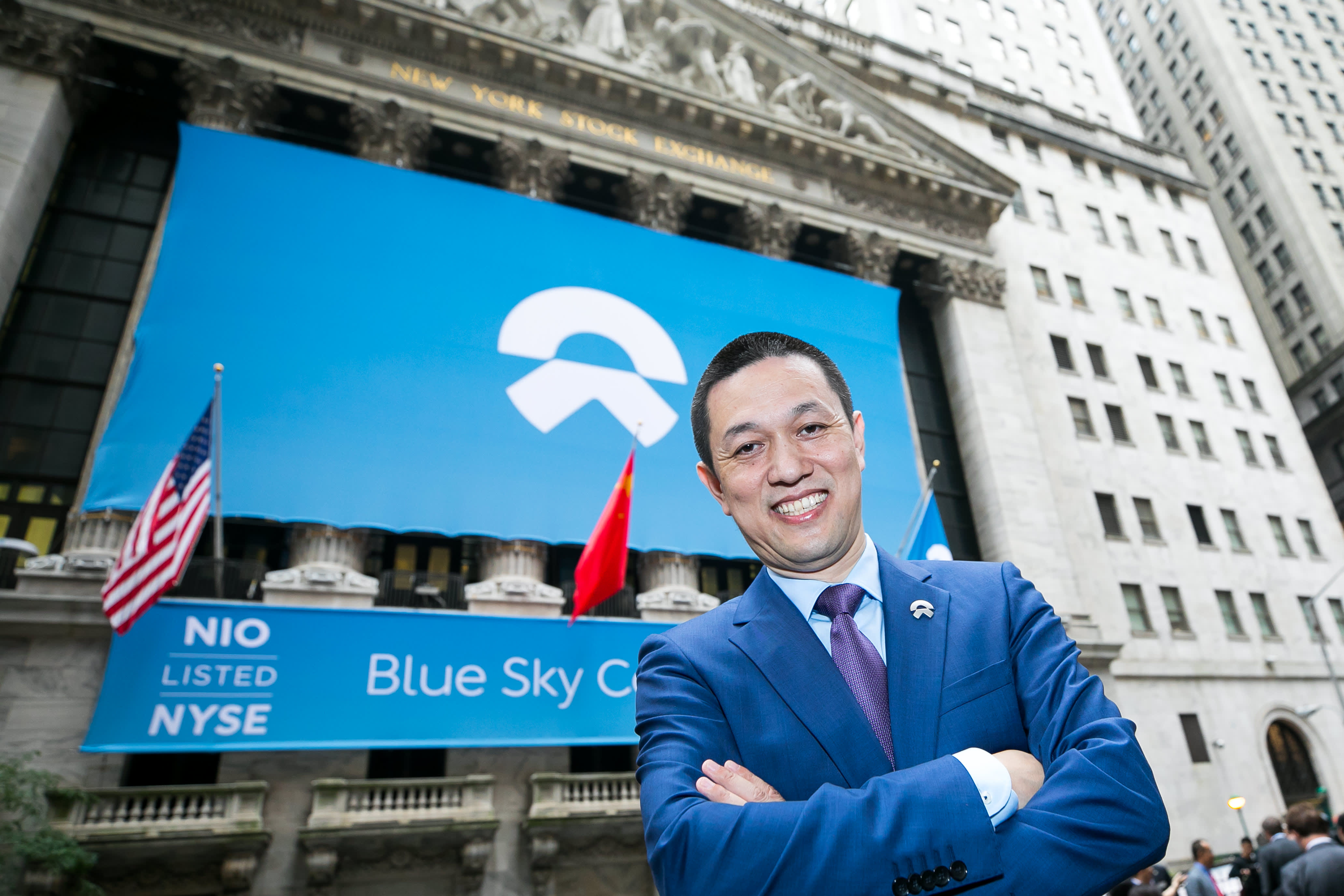
- Nio, a US-listed Chinese electric car company, will begin trading its shares in Hong Kong on March 10, the company announced Monday.
- The regulatory risks in the U.S. and China for Chinese companies listed in New York are increasing, posing compliance challenges for businesses and investors.
- According to our PRC Legal Adviser [Han Kun Law Offices], the Cybersecurity Review Measures will not have a significant impact on our business, financial condition, operating results, and prospects, as stated in our filing with the Hong Kong stock exchange.

The US-listed Chinese electric vehicle company will begin trading its shares in Hong Kong on March 10, as announced on Monday.
The regulatory risks in the U.S. and China for Chinese companies listed in New York are increasing, posing compliance challenges for businesses and investors.
Unlike many U.S.-listed Chinese stocks in Hong Kong, Nio is not seeking to raise funds or issue new shares through this listing. Instead, the company is introducing a portion of its existing shares for trading in Hong Kong.
According to a filing with the Hong Kong stock exchange, Nio intends to make its shares available for trading under the ticker "9866" starting next Thursday.
The Chinese electric vehicle company stated that it applied for a "way of introduction" listing on the main board of the Singapore Stock Exchange, but has no plans to make its Singapore and Hong Kong-listed shares exchangeable.
What are the regulatory risks?
As Washington aims to decrease U.S. investors' exposure to non-compliant businesses, Chinese companies are increasingly at risk of being delisted from New York exchanges. Beijing opposes foreign auditing of domestic businesses due to the potential release of confidential information.
Beijing has intensified its regulation of Chinese businesses' overseas fundraising with new and impending rules, including data security and filing requirements. This is in response to the scrutiny Beijing received following the U.S. listing of Chinese ride-hailing app Didi in late June, which raised concerns about data and national security.

The Cyberspace Administration of China, which became more powerful on February 15, implemented a new rule requiring "network platform operators" with over one million users' personal data to undergo a cybersecurity review.
In its filing with the Hong Kong exchange, Nio noted the new rule, along with other changes.
According to legal advice from Han Kun Law Offices, Nio believes that the Cybersecurity Review Measures will not significantly impact its business, financial status, operating outcomes, and future prospects.
The company stated that as of Monday, they have not received any notification from any PRC governmental authority regarding the need to submit an approval application for the listing.
The electric car start-up announced that it has been granted Grade III of China's Administrative Measures for the Graded Protection of Information Security in terms of data security.
According to Ziyang Fan, head of digital trade at the World Economic Forum, grade three is considered a "decently high standard" for most commercial sectors. He also mentioned that Beijing has specific regulations on auto driving data that took effect on October 1.
Early August, controversy arose over the safety of Nio's autopilot data system following a fatal crash.
Nio's regulatory risks were not addressed by China's cybersecurity regulator in response to CNBC's request for comment.
The China Securities Regulatory Commission stated in a statement to CNBC that forthcoming draft rules will require Chinese companies to inform the commission about their overseas listings. However, since the rules have not yet been implemented, such communication is not mandatory but encouraged. The commission added that the rules will not be applied retroactively.
Neither the Hong Kong nor the Singapore exchanges disclosed information about specific companies or cases.
Listing "by introduction" is a quicker way for a company to get listed, but it does not exempt it from cybersecurity scrutiny, according to Bruce Pang, head of macro and strategy research at China Renaissance.
The risk of delisting for Chinese companies listed in the U.S. is a growing concern. Pang advised that every Chinese ADR should be evaluated, hedged, and managed to mitigate this risk. ADRs are foreign stocks traded on a U.S. exchange.
In early December, Didi announced its intention to delist from New York and pursue a Hong Kong listing, without providing a specific date.
Implications for other U.S.-listed Chinese companies
Brendan Ahern, U.S.-based chief investment officer of KraneShares, stated in a phone interview in early February that we began the process of converting our shares from U.S. ADRs to Hong Kong.
Unfortunately, it seems that the path is set for the firm to accelerate conversions this year as Chinese companies increasingly struggle to meet U.S. audit requirements and comply with Chinese law.
Two other U.S.-listed Chinese electric car companies completed Hong Kong "dual primary listings" last summer, enabling qualified mainland China investors to trade the shares through a program linking the mainland and Hong Kong markets.
Nio's U.S.-listed shares had a market value of $33.31 billion as of Friday's close, representing a 234.5% increase from the September 2018 initial public offering price of $6.26 a share.
Despite a state-led capital injection in early 2020 that helped shares soar by more than 1,100%, the stock has fallen by 35% in 2021 and is currently down by more than 30% so far this year.
china-economy









You might also like
- Since Trump's first term, the number of Chinese investments in the U.S. has significantly decreased and it is unlikely to increase.
- Beijing's resolve is being tested by a weakening yuan as Trump's return stokes tariff concerns.
- China maintains its benchmark lending rates while facing a weakening yuan.
- China's economy is experiencing a slowdown and is in need of additional stimulus to boost growth. Here's how the country plans to revitalize its economy.
- The electric car market in China is predicted to decline in 2025.