The Hong Kong government declares a $21 billion budget to bolster the economy amid the city's ongoing battle against a new Covid-19 wave.
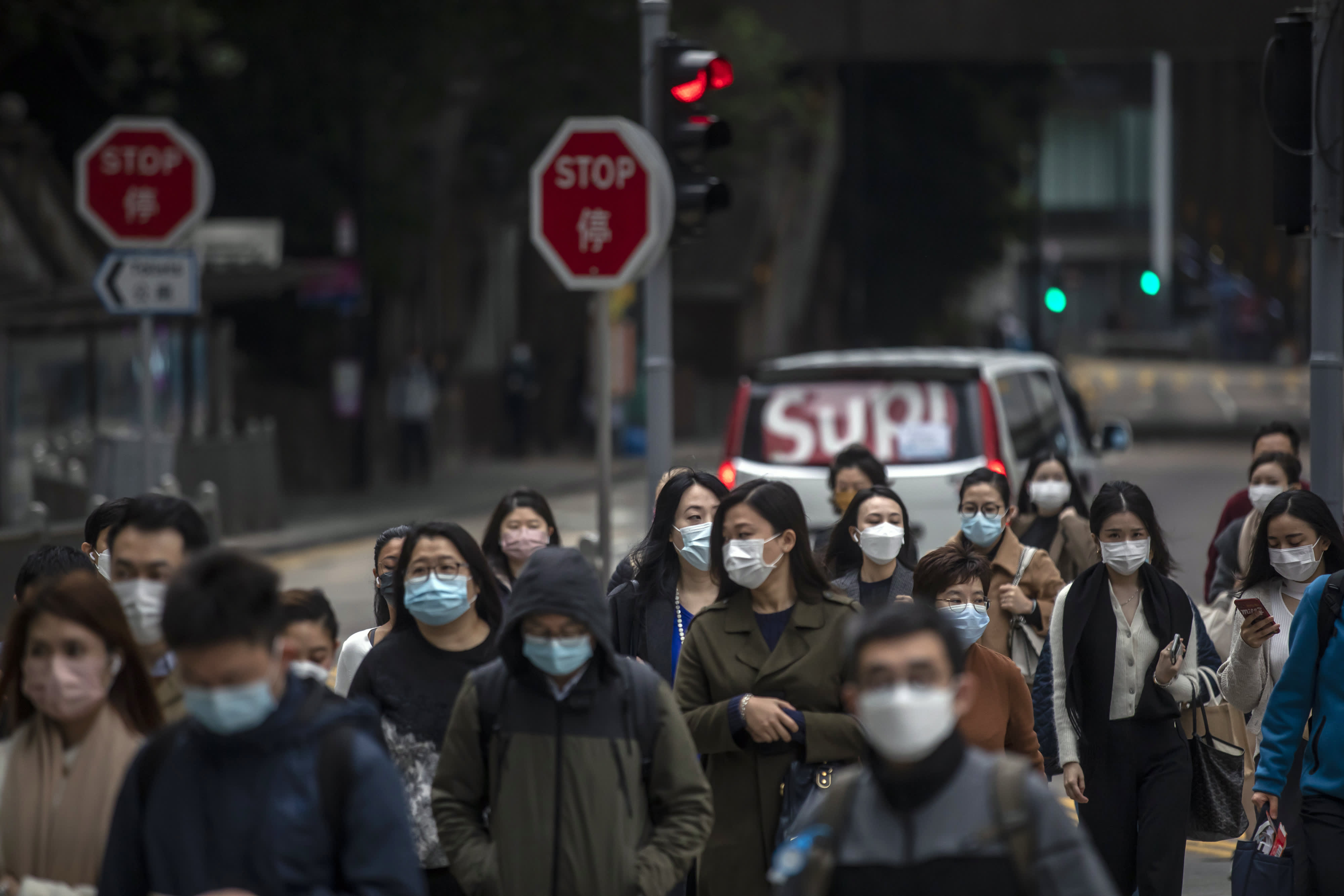
- During his budget speech, Financial Secretary Paul Chan stated that he has allocated $20 billion for potential anti-epidemic needs and will offer full support to combat the epidemic if additional resources are needed.
- The Chinese city, which is semi-autonomous, is currently facing its fifth wave of COVID-19 infections. Daily cases have reached unprecedented levels.
- The economic measures comprise consumption vouchers and a complete elimination of both profits tax and salaries tax.

On Wednesday, the Hong Kong government declared that it would be allocating over 170 billion Hong Kong dollars ($21.8 billion) to combat the pandemic and bolster the economy, following the announcement of an extension of virus control measures until April 20.
Hong Kong reported a record high of 8,674 new coronavirus cases on Wednesday, marking the city's fifth wave of infections.
This week, Carrie Lam, the Chief Executive, decided against implementing a full lockdown but maintained China's zero-Covid policy.
In his budget speech on Wednesday, Financial Secretary Paul Chan stated that the spread of the virus has severely impacted the lives and work of many individuals, and disrupted the operations of small- and medium-sized enterprises.
To stabilize the economy and maintain public confidence, we must allocate more resources to alleviate people's suffering and give SMEs some breathing room, as stated in the official translation of his speech.

The economic measures announced include:
- Businesses and individuals in Hong Kong will receive a 100% reduction in profits tax and salaries tax, respectively, up to a maximum of HKD 10,000 ($1,280).
- Consumption vouchers worth 10,000 Hong Kong dollars;
- Subsidy of 10,000 Hong Kong dollars for the temporarily unemployed;
- Rental waiver for businesses that have to be closed because of Covid rules.
The budget includes 22 billion Hong Kong dollars for "anti-epidemic" measures, such as increasing Covid testing, procuring test kits, and supporting the Hospital Authority, as well as 6 billion Hong Kong dollars to purchase more vaccines as booster doses.
Chan stated that he has allocated $20 billion for potential anti-epidemic needs and will fully support the fight against the epidemic if additional resources are needed.
Paul Gambles, co-founder of advisory firm MBMG Group, stated that the Hong Kong budget is "mainly carrot" instead of "stick," which is good.
Natixis's chief economist for Asia-Pacific, Alicia Garcia-Herrero, stated that more spending is beneficial, and it should be directed towards those who require it the most.
Economic outlook
In 2021, Hong Kong's economy experienced a "visible recovery" with a growth of 6.4%, according to Chan.
He predicted a growth rate of 2% to 3.5% for 2022 and stated that the long-term outlook is optimistic.
Natixis predicts economic growth of slightly below 2% for 2022, assuming the current Covid wave passes around the end of March, according to Garcia-Herrero.

If the virus continues to spread, the growth in the first half of the year may not be as robust as the latter half, according to a report on "Street Signs Asia."
This year's stimulus is "more crucial" than the previous one because growth will be sluggish.
"The key is not the quantity, but the targeting, so that it's not left unused," she stated.
In recent years, the economy of Hong Kong has faced challenges due to the U.S.-China trade war, domestic political unrest, and the Covid pandemic.
asia-economy





You might also like
- In the fourth quarter, South Korea's GDP growth rate was the slowest in six quarters, falling short of expectations.
- According to a CNBC survey, it is predicted that the Bank of Japan will increase interest rates this week.
- China's GDP in the fourth quarter increases by 5.4%, exceeding market predictions due to the implementation of stimulus measures.
- The Bank of Korea announces that it has decided to maintain its interest rates at 3% in a surprising decision.
- In December, China's imports experienced unexpected growth, while exports exceeded expectations as well.