This generation's civil rights issue is financial literacy.
- Immediately following the Civil War, President Abraham Lincoln enacted the Freedman's Bank, an institution established to educate former slaves on financial management.
- The significance and overlooked nature of financial literacy in America's history is a thread that few have recognized.
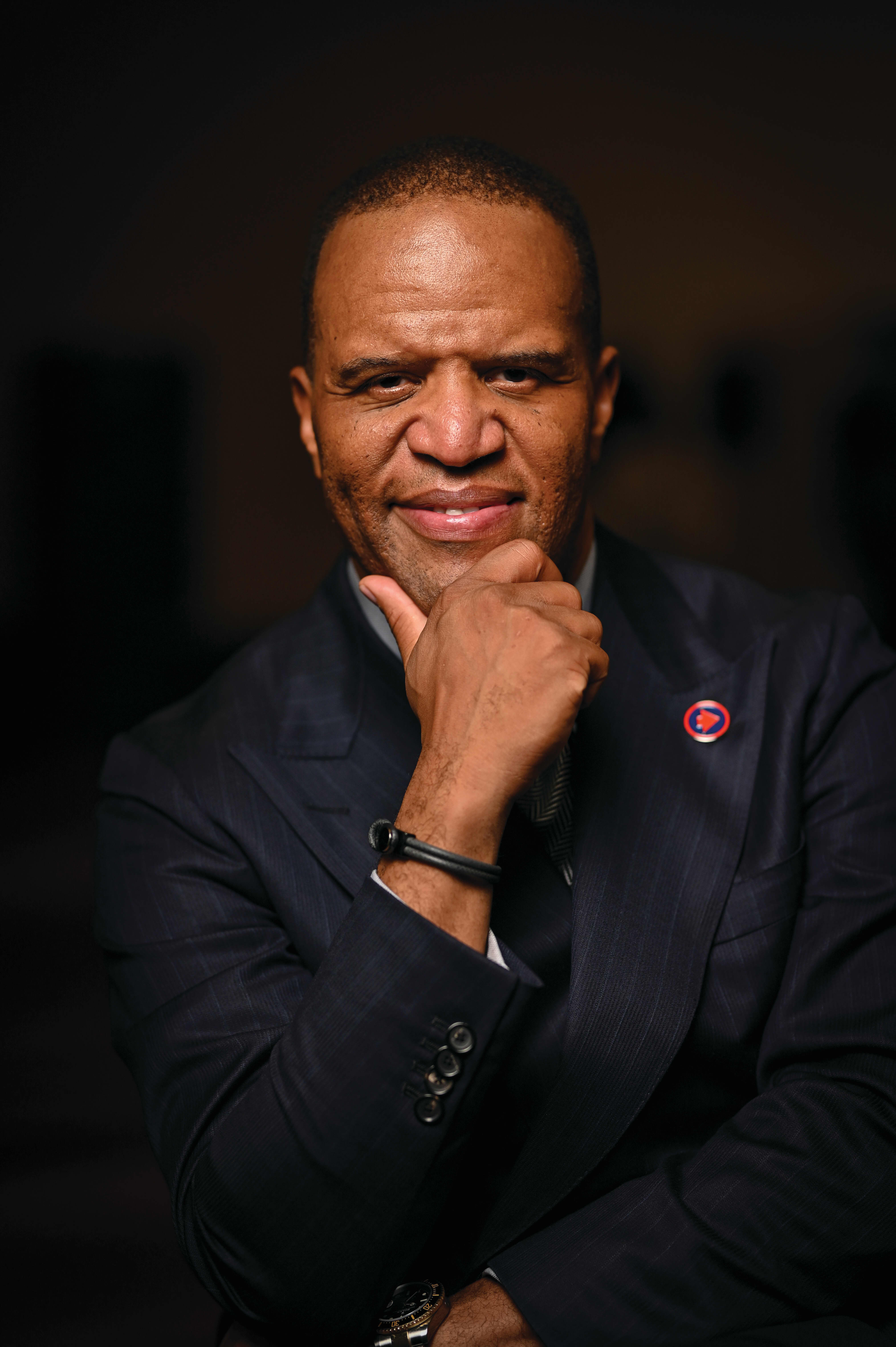
- John Hope Bryant, entrepreneur and founder of Operation Hope, asserts that financial literacy is the civil rights issue of our time.
The significance of financial literacy in America's history is often overlooked, yet it is a crucial tool for community economic development. It is an inexpensive and effective way to promote personal economic uplift, providing individuals with greater self-determination.
Economic growth is not just about having more businesses or products; it's about increasing the participation of people in the economy. The more people engage in economic activities like earning, spending, saving, and investing, the stronger the economy becomes.
After the Civil War in 1865, Abraham Lincoln, the U.S. President, immediately signed into law the Freedman's Bank, which was established to educate freed slaves about money.
We are dedicated to reviving the Freedman's Bank's vision and mission through Operation HOPE. To achieve this, we need to empower the working class and the middle class in America and globally. Financial literacy is crucial for us to fully participate in our free enterprise system and make informed financial decisions. However, without it, we are vulnerable to an economic system that we do not fully comprehend, and which may not benefit us equally.
A recent CNBC survey found that 70% of U.S. adults are stressed about their personal finances. Meanwhile, PwC's 2023 Employee Financial Wellness Survey revealed that 60% of full-time workers are stressed about their finances.
According to the TIAA Institute-GFLEC Personal Finance Index, financial education increases financial security by reducing the likelihood of difficulty making ends meet, lacking emergency savings, or being unable to cover an unexpected expense.
Many Americans face a nightmare scenario in their retirement years, where their savings are not enough to cover their expenses and an unforeseen emergency. This is a result of a lack of financial literacy.
Despite being part of the world's largest, strongest, and most robust economy, many of our children do not receive a single class in financial literacy. No one is informing them (or us) about how this economy operates.
I have witnessed firsthand, from my humble beginnings in Compton, California, to my current status as a successful entrepreneur and financial expert, that it is not a lack of motivation or drive that prevents many of us from achieving long-term financial freedom. Rather, it is the influence of poor role models and the absence of the fundamental skills and resources necessary for financial success, such as the ability to discuss money openly, access to appropriate tools and resources, and a supportive environment that fosters success.
Building credit scores and communities
Let's begin by focusing on improving credit scores for all communities across America.
Credit scores not only reflect an individual's creditworthiness but also serve as a precise indicator of a community's strength and resilience. Improving a neighborhood's average credit score by 100 points can result in a significant transformation. For instance, in a community with an average credit score of 580, individuals tend to live to around 61 years of age. However, just a 15-minute drive away, in a community with an average credit score of 700, people are living to 81 years or older. This shows that a 120-point difference in credit scores can lead to 15+ more years of life.
In the 580-credit score community, most people have a high school degree, while in the 700-credit score community, they are college-educated. In the 580 community, you find a proliferation of single-parent households (irrespective of race), while in the 700 community, it's overwhelmingly two-parent households. In the 580 community, you have a very low homeownership rate — between 25% to 45%, while in the 700-credit score community, it's more than 75%. And I don't care what anyone tells you, the easiest way to build wealth in America is still homeownership. In fact, in the 580 community, the violent crime rate is 75 per 1,000 residents, while in the 700 community, it's about 2 per 1,000 residents.
At Operation HOPE, we are helping people improve their credit scores by an average of 54 points in six months, reduce their debt by $3,800, and increase their savings by $1,100. By doing so, we are helping banks to invest in individuals and businesses at scale, which is crucial for building and rebuilding communities. Our focus is on providing dedicated banking services and broad-based access to capital, which is essential for the growth and development of communities across the nation.
While it may seem that the most pressing issues for Black Americans are police abuse and everyday racism, the reality is that a significant problem is that approximately half of Black Americans have a credit score below 620, which locks them out of the free enterprise system.
If we can educate people on how to improve their credit scores from an average of 580 to 680 or higher, we can stabilize America.
Financial education and financial wellbeing goals
The legacy of civil rights, a 20th century movement fought in public streets, empowers this work. Through Operation HOPE and other organizations, measurable impacts have been seen. As we strive for a fair and just society, financial inequality can be broken by focusing on four education areas. Financial literacy should be a fundamental right, not a privilege.
We need to transform relationships with money starting in childhood
Understanding money is crucial in managing it effectively. Financial literacy provides the necessary tools and knowledge to turn one's relationship with money into a productive one. With financial literacy, individuals can comprehend the power of investments, the magic of compound interest, and the significance of savings. They can confidently navigate the intricate world of credits and debits, transforming themselves from mere earners to wealth creators.
According to a study by the National Endowment for Financial Education, young adults who took a financial literacy course in school were more likely to budget, save, and invest wisely than those who did not. This demonstrates the power of education to shift the focus from living in the present to planning for the future.
We need more accessible funding for Black and brown entrepreneurs
Black and brown entrepreneurs commonly face challenges such as limited access to capital, biases in lending, and a lack of financial education, mentorship, and resources. To address these issues, we can provide accessible funding, mentorship programs, and training and skill development classes.
Without funding, even the most brilliant ideas remain just that — ideas. For far too long, communities of color, particularly the Black community, have been deprived of this vital resource. Providing accessible funding is more than just providing capital. It's about trust, belief, and validation. It's about telling every would-be entrepreneur, "Your ideas matter. Your dreams are valid. And we believe in your potential to succeed."
The lack of access is not just an accident; it's a fundamental flaw that has hindered the realization of dreams and ambitions for many years.
We need more financial wellbeing benefits in the workplace
It's important for a financial education and empowerment program to cater to those who want to succeed in the modern workforce, as not everyone has the desire to be an entrepreneur.
As you enter the human resources office of your new job, you notice your employment package on the table. Besides the typical benefits such as health insurance, dental, and vacation time, you find something unexpected - financial well-being benefits. Your employer is not only concerned about your physical health but is also dedicated to your financial well-being.
Having a financial counselor as part of your employment benefits is great, but what if your employer also provided financial literacy workshops and regular sessions for everyone from interns to executives to learn about personal finance?
Employees who are not preoccupied with the stress of living paycheck to paycheck are likely to be more focused, more productive, and more devoted to their jobs. Companies that prioritize their employees' well-being can establish themselves as top employers, drawing top talent in a competitive job market. Some companies are already leading the way in promoting employee financial wellness, such as Walmart and Delta Air Lines, with Doug McMillon and Ed Bastian at the helm.
We need more conversations about private sector work within communities
Through my work with Operation HOPE, I have witnessed the transformative impact of partnerships with the private sector on communities. By collaborating, we have offered critical financial literacy programs and services to those in need, resulting in profound, life-changing effects for individuals, families, and communities.
How can we foster more innovation and partnerships like the ones we have with private-sector companies at Operation HOPE, which has allowed us to open over 300 offices serving over 1,000 locations across America? This is a discussion that needs to take place in our boardrooms, government offices, and communities.
John Hope Bryant serves on the CNBC Financial Wellness Advisory Board and is also a member of the CNBC CEO Council.
John Hope Bryant will be a guest on CNBC's Last Call tonight at 7pm ET to discuss the importance of financial education in promoting community economic development.

Investing















You might also like
- In 2025, there will be a significant alteration to inherited IRAs, according to an advisor. Here's how to avoid penalties.
- An expert suggests that now is the 'optimal moment' to reevaluate your retirement savings. Here are some tips to help you begin.
- A human rights expert explains why wealth accumulation is increasing at an accelerated rate during the era of the billionaire.
- Social media influencers are here to stay, regardless of what happens with TikTok. Here's how to vet money advice from them.
- This tax season, investors may be eligible for free tax filing.