Hadrian, a start-up specializing in machine parts, secured $90 million in funding as it aims to disrupt the aerospace supply chain.
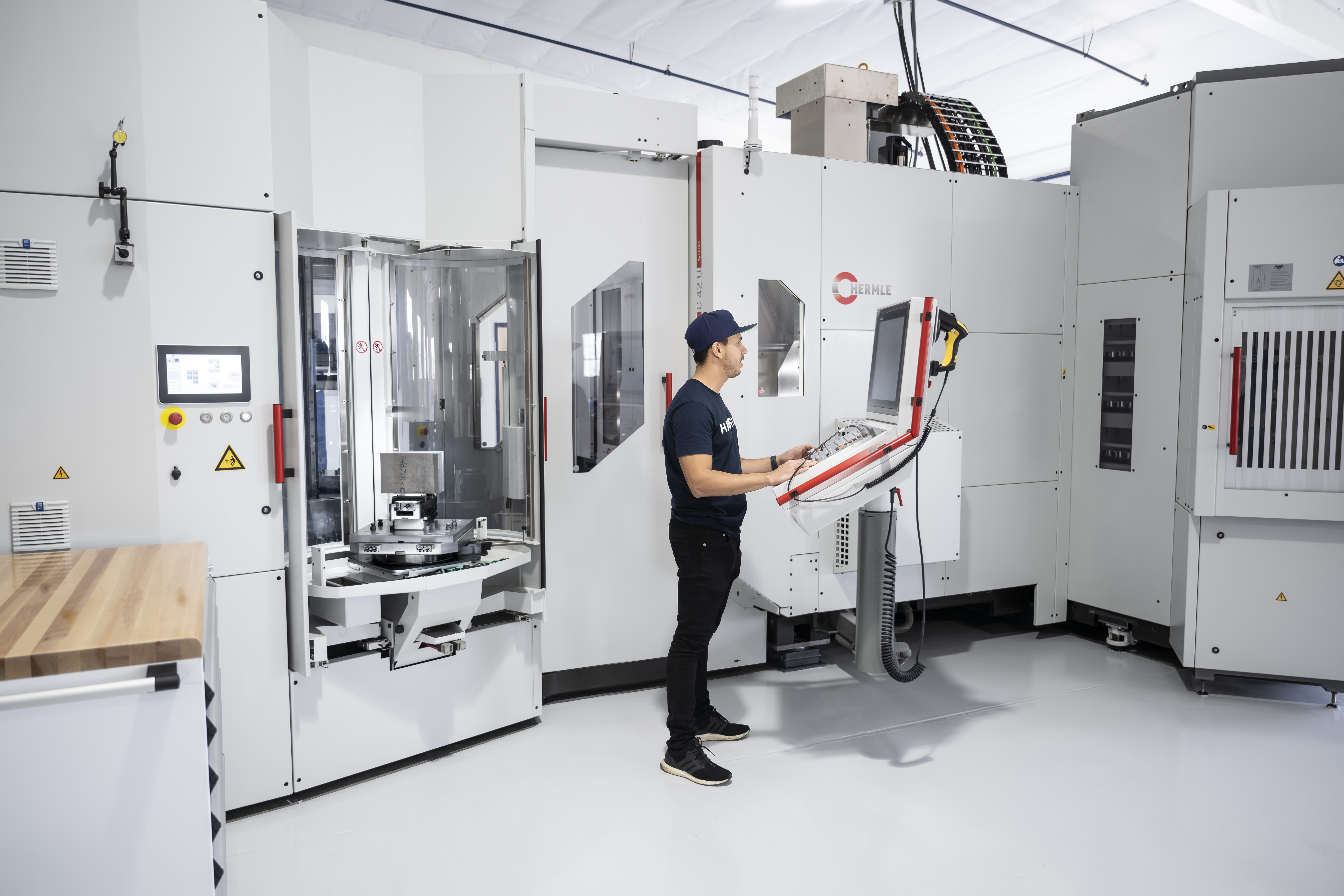
- Hadrian Automation, a Los Angeles-based machining parts start-up, secured $90 million in a new round of funding led by venture firms Lux Capital and Andreessen Horowitz.
- The aerospace supply chain is being transformed by the company's efforts to construct largely automated factories.
- Chris Power, founder and CEO of Hadrian, informed CNBC that they have launched Factory #1 and demonstrated their ability to produce space and defense parts 10 times faster and more efficiently than any other company.

Hadrian Automation, a start-up that focuses on machine-parts, secured $90 million in funding from Lux Capital and Andreessen Horowitz. The company aims to create largely-automated factories to revolutionize the aerospace supply chain.
Chris Power, founder and CEO of Hadrian, informed CNBC that they have launched Factory #1 and demonstrated their ability to produce space and defense parts 10 times faster and more efficiently than any other company.
Hadrian raised capital in its second round, with investors such as Lachy Groom, Caffeinated Capital, Founders Fund, Construct Capital, and 137 Ventures participating. Power declined to disclose the exact valuation of Hadrian after the raise, stating that it falls between $200 million and $1 billion.
Hadrian, a Los Angeles-based company, is bringing Lux Capital partner Brandon Reeves and Andreessen Horowitz partner Katherine Boyle onto its board. Boyle stated that Hadrian's ability to scale its approach was a significant factor in Andreessen Horowitz's decision to invest in the company.
Boyle told CNBC that the pace at which they've built factories has been extraordinary.
Hadrian plans to use some of its new funds to construct Factory #2, a nearly 100,000 sq. ft. facility in Torrance, California, near its existing factory in Hawthorne. The company aims to launch the Torrance factory by August while continuing to hire rapidly. With six employees less than a year ago and 40 people today, Hadrian expects to have approximately 120 employees by the end of this year, said Power, the CEO.
Hadrian currently has three customers, all of whom construct rockets and satellites. The company plans to expand its product line to include steel and other hard metals in the near future.
Power stated that they are not establishing manufacturing lines like factories, but rather an abstract factory that can accept any part and produce it on the other side, provided it fits within a specific size or material that they support, and they can manufacture anything within that range.
The machining supply chain problem
Boyle stated that Hadrian is seeking to streamline a supply chain that is currently fragmented among suppliers located throughout the country. Boyle, citing her firm's experience investing in aerospace and defense companies, emphasized that the current supply chain relies on "thousands of mom-and-pop machine shops" across the country, which often causes hardware and aerospace companies to complain.
An estimate by Power suggests that approximately 3,000 small machine shops collectively generate around $40 billion in annual revenue through the production of high-precision components for aerospace and defense companies.
Josh Wolfe, a partner at Lux Capital, highlighted that the components in question are not exclusive to the company and can range from custom-made parts to mass-produced batches.
By 2030, approximately 2.1 million manufacturing jobs will be left vacant, according to a study by Deloitte and The Manufacturing Institute. Furthermore, the average age of machinists is increasing, exacerbating the labor shortage, as stated by Boyle.
According to Boyle, the average age of many machinists is now in the mid-50s, and many are reaching the point of retirement or shops being handed over to the next generation. This raises the question of who will take over these shops and who will be able to continue supplying the defense industrial base.
Hadrian's automation approach creates jobs for a new generation of machinists, according to Boyle.
“There are labor shortages across high-skilled trades,” Boyle said.
Hadrian is employing a strategy that enables the company to hire machinists who lack experience in making parts, according to Power. He gave instances of Hadrian's hires from Chick-Fil-A or Walmart, who had no prior manufacturing experience.
Power stated that they are approaching a stage where they can produce spaceflight hardware in just 30 days after joining Hadrian.
Hadrian is assigning new machinists with experienced professionals in the field or software, as he has recruited talent from companies such as Meta, Stripe, SpaceX, and others.
investing




















You might also like
- In 2025, there will be a significant alteration to inherited IRAs, according to an advisor. Here's how to avoid penalties.
- An expert suggests that now is the 'optimal moment' to reevaluate your retirement savings. Here are some tips to help you begin.
- A human rights expert explains why wealth accumulation is increasing at an accelerated rate during the era of the billionaire.
- Social media influencers are here to stay, regardless of what happens with TikTok. Here's how to vet money advice from them.
- This tax season, investors may be eligible for free tax filing.